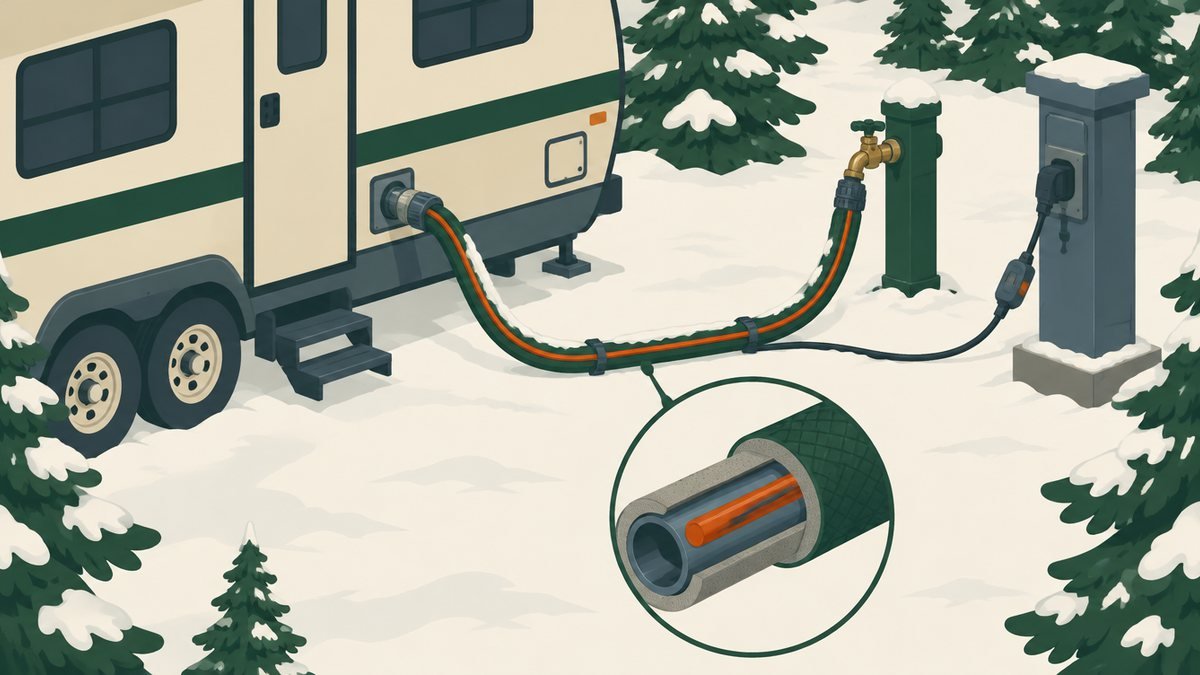
A heated RV water hose lets you stay connected to campground water when temperatures drop below freezing. Instead of filling your fresh tank and disconnecting every night, you plug the hose into a 120-volt outlet and a built-in heating element keeps water moving from the spigot to your rig. For winter campers, ski-season travelers and full-timers in cold regions, it’s often the difference between running water and a frozen line.
This guide explains how a heated hose works, its limits, how to set it up properly, and what to look for when choosing one.
How a heated RV water hose works
A heated water hose for RV use looks like a thick garden hose with a power cord at one end. Inside, it combines a few layers:
- An inner water tube made of drinking-water-safe material.
- A heating cable running along the length of the tube.
- Insulation and an outer jacket that hold heat in and protect the hose.
- A thermostat that switches the heater on when the temperature drops near freezing and off when it warms up.
Because of the thermostat, the hose doesn’t draw power all the time; it heats only when needed. Each model has a minimum temperature rating set by its manufacturer, and that’s the most important number to check against the conditions where you’ll camp.
Why a regular RV water hose freezes
A standard RV drinking water hose holds a column of still water with nothing to keep it warm. Overnight, that water can freeze, blocking flow and potentially splitting the hose or damaging fittings. The spigot, your pressure regulator and your RV’s city water inlet are just as vulnerable.
A heated hose only solves part of the problem. The weak points are usually the ends: the spigot connection and the RV inlet, where fittings are exposed.
Heated hose vs regular RV drinking water hose
Both carry fresh water to your rig, but they’re built for different jobs:
- Regular RV water hose: lightweight, flexible, inexpensive and easy to coil. Ideal from spring through fall. It needs to be disconnected and drained whenever a freeze is forecast.
- RV heated water hose: heavier and stiffer, needs a power outlet, and costs more. In return, it can stay connected through freezing nights within its rated temperature range.
Many cold-weather campers carry both: a standard drinking water hose for most of the year and a heated hose for winter trips. Whichever you use, choose one made for drinking water, not a garden hose, which may not be intended for potable use.
Signs your heated hose isn’t working
Heating elements and thermostats can fail, often without obvious warning. Watch for these signs:
- Reduced water flow or no flow on a cold morning.
- Ice forming at the fittings, even though the middle of the hose feels fine.
- No warmth at all along the hose when temperatures are near or below freezing.
- A GFCI outlet that keeps tripping when the hose is plugged in, which can point to damaged insulation or moisture in a connection.
- Visible damage to the cord, plug or outer jacket.
If you see any of these, unplug the hose, disconnect it and switch to your fresh tank until you can inspect or replace it. Don’t try to repair the heating element or cord yourself.
Setting up a heated hose the right way
Protect the spigot and the connections
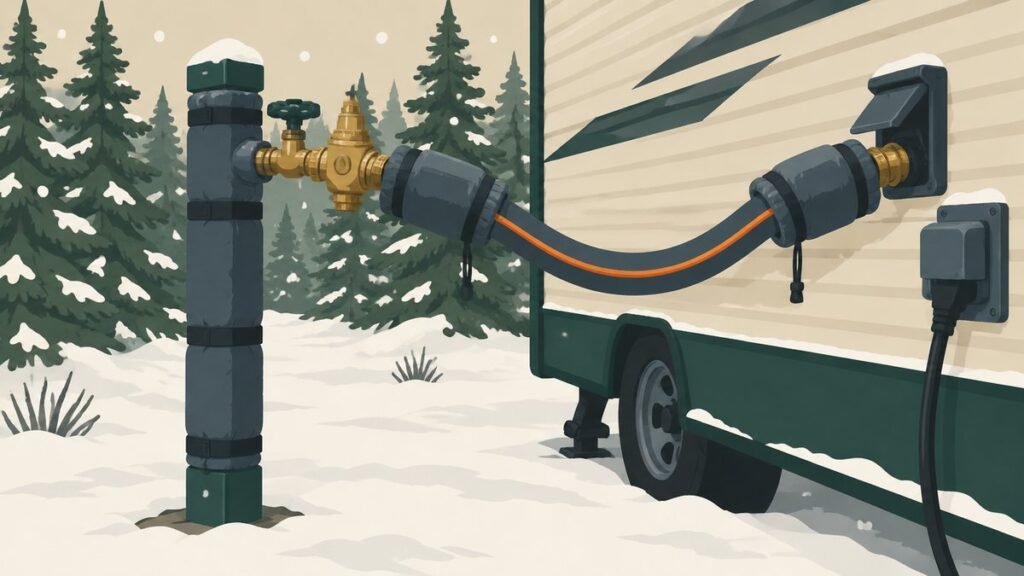
Many campground standpipes have frost-free spigots, but the exposed part above ground can still freeze. Wrap exposed piping with foam insulation or heat tape rated for the job, and cover the fittings at both ends of the hose. Some heated hoses come with insulated end covers; if not, insulation sleeves work.
Keep your pressure regulator protected
A brass RV water pressure regulator belongs between the spigot and the hose. Because it sits at the most exposed point, wrap it in insulation along with the spigot.
Plug into a proper outlet
Plug the hose into a weatherproof, GFCI-protected outlet, such as the one on a campground power pedestal or an outdoor-rated outlet on your RV. Don’t use an indoor extension cord. If you must extend the cord, use only an outdoor-rated cord of adequate gauge, and keep the connection off the ground and out of snow and standing water.
Don’t forget the RV side
The hose keeps water liquid until it reaches the rig, but the lines inside your RV, especially in the underbelly and in exterior compartments, can still freeze. Heated or enclosed underbellies help, as do tank heaters and keeping the interior heated. Leave cabinet doors open on cold nights so warm air reaches the plumbing.
How to choose a heated RV water hose
When comparing models, focus on features rather than marketing claims:
- Temperature rating. Pick a hose rated for colder conditions than you expect. A hose rated only for mild freezes won’t cope with prolonged deep cold.
- Drinking water safety. Look for a hose labeled as safe for drinking water and lead-free, ideally with third-party certification for potable water use.
- Length. Measure the distance from typical spigots to your inlet. Buying slightly longer than you need is better than stretching a hose tight, but avoid a lot of extra length coiled up.
- Can it be joined? Some heated hoses are designed to connect end to end; others aren’t. Check before you plan on combining two.
- Power cord and thermostat. A long enough cord to reach the pedestal, and a thermostat you can trust, matter as much as the hose itself.
- Fittings. Sturdy metal fittings with good washers resist leaks and cross-threading.
- Flexibility in cold. A hose that stays flexible in freezing weather is much easier to coil and store.
- Warranty and support. Heating elements can fail; a clear warranty helps.
Alternatives to a heated hose
A heated hose isn’t the only way to have water in winter:
- Fill and disconnect. Fill your fresh tank, then disconnect and drain the hose. You’ll use the water pump for water and refill as needed. Your fresh tank and lines still need protection from freezing.
- Heat tape and insulation on a regular hose. Some owners wrap a standard RV water hose with heat tape and pipe insulation. It works, but a purpose-built hose is generally neater and more reliable.
- Winterize and use jugs. In very cold conditions or for short trips, some owners keep the RV winterized and carry water separately.
Caring for your heated hose
- Unplug the hose before connecting or disconnecting it.
- Inspect the cord and jacket for cuts, crushed spots or exposed wiring. Stop using a damaged hose.
- Don’t drive over it or kink it sharply.
- At the end of the season, drain it fully, let it dry and store it loosely coiled.
- Like any RV water hose, flush it before use and store it with the ends capped or connected together to keep it clean. Pair it with a good water filter and regular fresh water tank sanitizing for clean water year-round.
Frequently asked questions
Does a heated RV water hose use a lot of electricity?
It depends on the model and the weather. Because the thermostat turns the heater on only near freezing, it doesn’t run continuously in mild conditions. Check the manufacturer’s power rating and make sure your circuit can handle it along with your other loads.
Can I leave a heated hose plugged in all winter?
Most are designed to stay plugged in during cold weather. Inspect it regularly, keep connections dry, and follow the manufacturer’s instructions.
Can I use a heated hose without power?
You can, but then it’s just an insulated hose and can freeze. If power goes out on a cold night, disconnect and drain the hose and rely on your fresh tank until power returns.
Will a heated hose stop my RV pipes from freezing?
No. It protects the hose itself. The spigot, regulator, inlet and your RV’s internal plumbing need their own protection.
Sources
These public agencies and standards organizations publish guidance that is a good place to confirm the details on this topic.