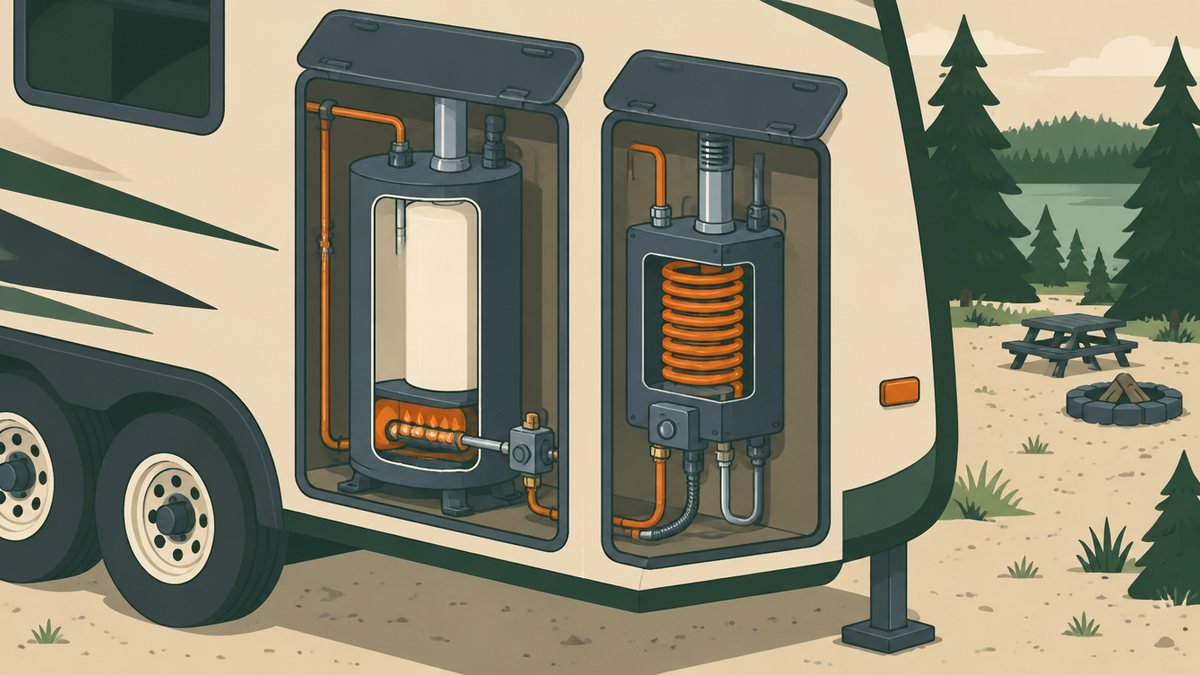
Your RV water heater is one of the hardest-working appliances on board, and one of the least understood. Most RVs use either a traditional tank heater that keeps a small supply of water hot, or a tankless unit that heats water on demand as it flows. Each design has trade-offs in hot water supply, energy use, maintenance and winter care, and knowing which one you have makes troubleshooting and upgrades much easier.
This guide explains how both types work, the fuel and power options you’ll see, and how to decide whether a tankless upgrade makes sense for the way you camp.
How an RV water heater works
Every RV hot water heater does the same basic job: it takes cold water from your fresh tank or city water connection, heats it, and sends it to the hot side of your faucets and shower. What differs is when and how the heating happens.
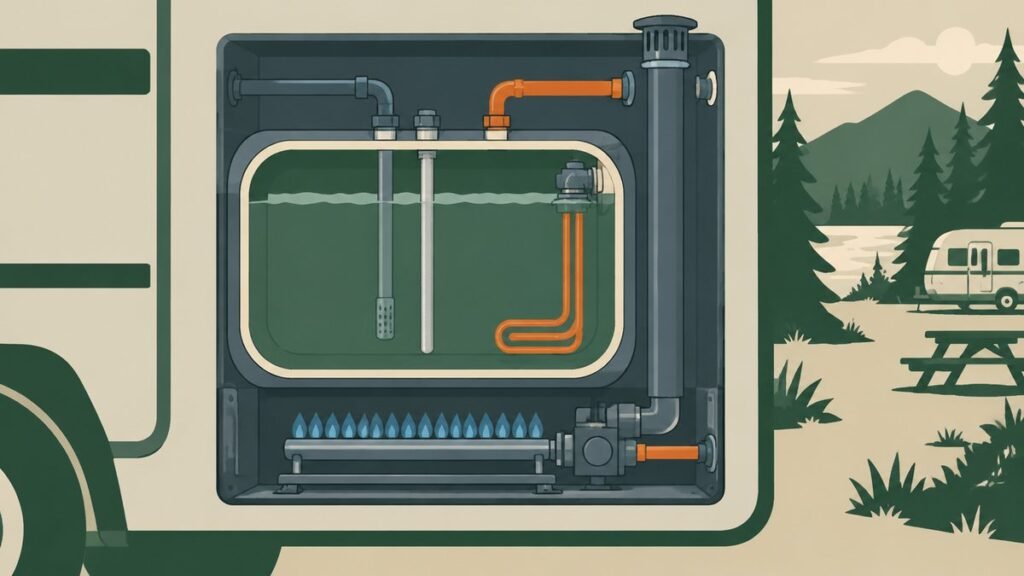
Most units are mounted in an exterior wall, with an access panel on the outside of the RV. Behind that panel you’ll typically find the burner (on propane models), the drain plug or anode rod, the pressure and temperature relief valve and, on many models, an electric element. Inside the RV, the back of the heater connects to the hot and cold lines, usually with a set of bypass valves for winterizing.
Tank RV water heaters
A tank-style RV water heater stores a small volume of water, commonly around 6 or 10 gallons, and keeps it hot with a thermostat. When you open a hot faucet, cold water flows into the bottom of the tank and pushes hot water out the top.
Heat sources
- Propane. An RV propane water heater uses a burner under a flue tube that runs through the tank. Most modern units light automatically with electronic ignition; older ones may use a pilot light.
- Electric. Many units also have a 120-volt heating element that works when you’re on shore power or running a generator. An RV electric water heater element is quieter and saves propane at campgrounds with included power.
- Engine heat. Some motorhomes route engine coolant through a heat exchanger in the tank, so you get hot water while driving.
Pros and cons of a tank
- Pros: simple, proven design; works with low water flow; hot water available instantly once the tank is up to temperature; parts are widely available.
- Cons: limited supply, so long showers can run out; the tank must be drained and bypassed for winter; it takes time to recover after the hot water is used up.
Tank material matters for maintenance. Some tanks are steel with a porcelain lining and rely on a sacrificial anode rod to slow corrosion. Others are aluminum and generally don’t use an anode. We cover this in detail in our guide to the RV water heater anode rod and bypass valve.
Tankless RV water heaters
A tankless water heater for RV use, also called an on-demand or instant water heater, has no storage tank. When it detects water flowing through it, a propane burner fires and heats the water as it passes through a heat exchanger. When you close the faucet, the burner shuts off.
How tankless units differ
- Endless hot water, as long as you have propane, power for the controls, and enough water flow.
- Minimum flow rate. The burner only lights above a certain flow. Very low flow, such as a trickle or a low-flow showerhead turned down, may cause the water to turn cold.
- Temperature rise depends on incoming water. In cold weather, the unit has to heat colder water, so you may notice cooler output or need to reduce flow.
- Less to drain in winter, although the heat exchanger and lines still need to be protected from freezing. Follow the manufacturer’s winterizing steps exactly.
Most RV tankless units run on propane, often called a tankless RV propane water heater. Electric tankless water heaters for RVs exist, but heating water instantly takes a lot of power, so they’re less common and have to be matched carefully to your electrical system.
Pros and cons of tankless
- Pros: no running out of hot water; no waiting for a tank to reheat; less water to drain for winter.
- Cons: higher upfront cost; sensitivity to flow rate; you may waste some water waiting for hot water to reach the faucet; installation in an existing RV may require modifying the exterior opening, gas line and plumbing.
Tank vs tankless: which RV water heater is right for you?
There’s no single best choice. Consider how you camp:
- Weekend campers at full-hookup parks often do well with a tank heater, especially one with an electric element.
- Families and long-term campers who take back-to-back showers may appreciate the endless supply of a tankless unit.
- Boondockers should think about water and propane use. Endless hot water is less useful when your fresh tank is the real limit, and with either type you can save water by catching the cold water that runs before the hot arrives.
- Cold-weather campers should look closely at how each model behaves with cold inlet water and how it’s protected from freezing.
If you’re replacing a heater, measure the exterior opening and check whether a replacement model is designed to fit it. Many tankless units are sold in sizes intended to fit common RV openings, but always confirm with the manufacturer.
Basic RV water heater maintenance
Whatever type you have, a little routine care prevents most problems:
- Flush sediment from tank models periodically by draining the tank and rinsing it out.
- Inspect or replace the anode rod on steel tanks.
- Test the pressure and temperature relief valve as your manual recommends, and keep it clear.
- Keep the burner area clean. Insects and spiders sometimes build nests in burner tubes and vents; screens help keep them out.
- Never turn on the heat source with an empty tank. Running an electric element dry can burn it out almost immediately.
- Winterize properly before freezing weather, and when you bring the RV back into service, refill the heater completely before turning it on and sanitize the fresh water system.
Safety notes
RV water heaters involve propane, 120-volt electricity and water at scalding temperatures. Turn off both the propane and electric controls before working on the heater, and let it cool completely before opening the drain or relief valve. If you smell propane, put out any flames, leave the RV, and call 911 or your propane supplier from a safe distance. Gas valve, burner and wiring repairs should be handled by a qualified RV technician.
Frequently asked questions
How long does it take an RV water heater to heat up?
It varies by tank size, heat source and incoming water temperature. Running propane and electric together, where your unit allows it, usually heats the tank faster than either alone. Check your owner’s manual for your specific model.
Can I run my water heater on propane and electric at the same time?
Many tank units allow it. It’s a common way to speed recovery. Check your manual to confirm your model supports it.
Why does my tankless RV water heater go cold?
The most common cause is water flow dropping below the unit’s minimum, often with low-flow fixtures or when mixing hot and cold. Other causes include low propane, low battery voltage for the controls, or a clogged inlet screen.
Is a tankless RV water heater worth the upgrade?
It can be if you regularly run out of hot water and have good propane capacity. If your current tank heater meets your needs, the cost and installation work may not be justified.
Sources
Check the owner’s or installation manual for your specific unit, since brands and models vary. These pages back up the details above.