
An RV water filter improves the taste and smell of the water you drink and cook with, and it can catch sediment before it reaches your pump, faucets and water heater. Campground water varies from one stop to the next: some is clean and mild, some has a strong chlorine taste, some carries grit, rust or minerals. A filter system lets you smooth out that difference so you’re not guessing at every new site.
This guide explains how RV water filtration works, the main filter types, how to set up an RV water filter system, and how to maintain it so it actually does its job.
What an RV water filter does and doesn’t do
Most filters work by forcing water through a material that traps particles or adsorbs some dissolved substances. Depending on the type, a filter may:
- Remove sediment such as sand, silt, rust flakes and scale.
- Reduce chlorine taste and odor, and some other substances that affect flavor.
- Reduce certain contaminants, depending on how the filter is rated and tested.
What it doesn’t do automatically: make unsafe water safe. Many ordinary filters aren’t designed to remove bacteria or viruses. If you have reason to doubt a water source’s safety, check local advisories and use a filter or treatment that’s specifically rated for what you’re trying to remove. Always read the manufacturer’s claims and look for independent certification for the contaminants you care about.
Types of RV water filters
Inline hose filter
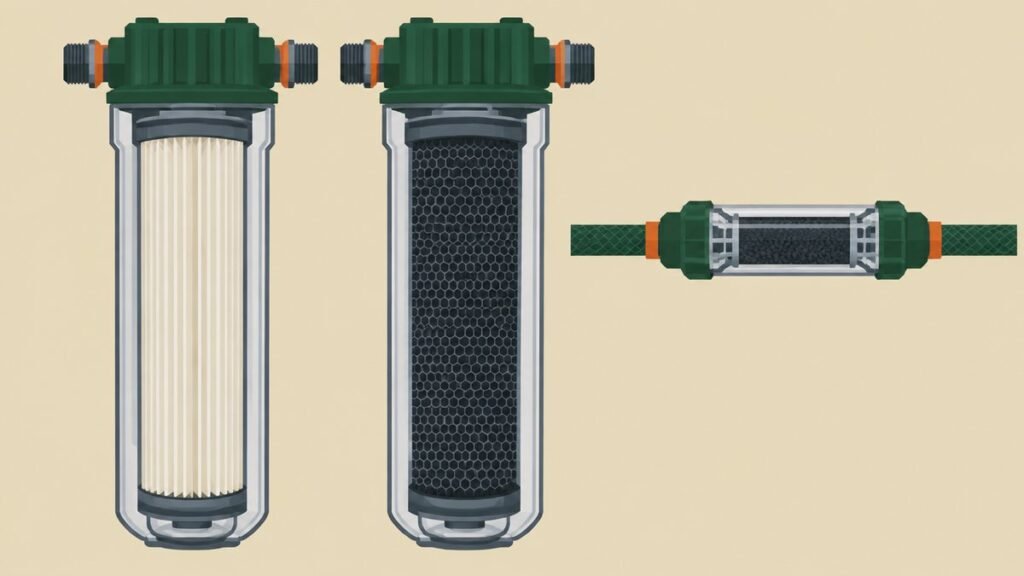
A small cartridge that attaches between the spigot and your hose. It’s inexpensive, easy to replace and good for taste and odor. It’s a common first filter for new RV owners, though it’s not designed for heavy-duty filtration. Some inline filters are made of flexible housings that can freeze and crack in winter, so drain them when it’s cold.
Canister or housing filter systems
A canister system uses a rigid housing that holds replaceable cartridges, usually mounted on a stand or the RV. A two-stage RV water filtration system, for example, might use a sediment filter first and a carbon filter second. These systems hold more media and filter better than a small inline unit.
Sediment filters
These filters trap particles and protect the rest of your plumbing, filters and pump. They’re often rated in microns; a lower number means the filter traps smaller particles but may restrict flow more.
Carbon filters
Carbon filters adsorb chlorine and many compounds that cause odor and taste problems. Carbon block cartridges generally filter more finely than loose granulated carbon.
Specialty filters
Other filters target specific problems: reducing certain heavy metals, minerals or other contaminants. Reverse osmosis units produce very pure water but waste water and need pressure and a drain; they’re more common in larger RVs or permanent installations.
How to choose an RV water filter system
- Know your water. If you mostly stay at one park, find out about its water quality. If you travel often, a flexible system that handles sediment and taste is a good all-rounder.
- Check certification. Look for independent certification for the claims on the label, rather than relying on marketing language alone.
- Consider flow rate. Fine filters can reduce flow. Make sure the filter you choose gives enough flow for your showers and appliances.
- Think about space and mounting. Canisters need room and should be supported so they don’t strain the hose or spigot.
- Consider replacement cost and availability. A filter that’s cheap but hard to replace on the road isn’t much help.
- Match the system to the season. If you camp in freezing weather, choose housings and fittings you can drain or protect.
Where to install an RV water filter
There are three common places:
- At the spigot (exterior). The most common arrangement: spigot, regulator, filter, hose, RV. This protects the whole RV, including the pump and heater. See our guide to the RV water pressure regulator for the usual order.
- Inside the RV on the inlet line. A built-in filter housing protects against anything the hose picks up and is out of the weather.
- At the kitchen faucet. A smaller filter or dedicated faucet gives you filtered drinking water, in addition to or instead of whole-RV filtering.
Many owners use a combination: a sediment filter at the spigot and a carbon filter at the kitchen tap for drinking water.
How to install a filter
- Turn off the spigot and release pressure.
- Rinse the new cartridge as directed, since many carbon filters need to be flushed to remove loose carbon fines.
- Install the cartridge in the housing, making sure the O-ring is clean, lubricated if the manufacturer recommends it, and seated correctly.
- Hand-tighten the housing, then connect the hoses with the arrow pointing in the flow direction if the filter is directional.
- Turn on the water slowly and check for leaks.
- Run water until it’s clear.
Maintaining your filter
- Replace cartridges on schedule. Follow the manufacturer’s recommendation, and replace sooner if flow drops or taste returns. An old filter can harbor bacteria and no longer protects.
- Drain housings in freezing weather. Water in a housing can freeze and crack it.
- Remove cartridges before sanitizing. Chlorine can damage some filters. See our guide on how to sanitize an RV fresh water tank.
- Keep the filter off the ground and protected from direct sun and impact.
- Carry a spare cartridge so you’re not stuck with a clogged filter far from a store.
Water filter vs water softener
A filter and a softener solve different problems. A filter removes particles and some chemicals. A softener exchanges minerals that cause hardness, such as calcium and magnesium, for other ions. If you see white scale on fixtures and in the water heater, hardness is the likely issue; see our guide to the RV water softener to learn whether you need one. Many owners use both: a softener, a sediment filter and a carbon filter in sequence, installed in the order the manufacturers recommend.
Troubleshooting
- Low flow after installing a filter. The cartridge may be too fine for your flow needs, or it’s clogged, or the housing isn’t seated properly.
- Bad taste or odor continues. The filter may be used up, not rinsed properly, or the odor comes from the tank or water heater instead.
- Cloudy water. Tiny air bubbles are common after installation; let water sit in a glass. If it doesn’t clear, check for sediment or a failing filter.
- Leaks at the housing. Check the O-ring and housing threads, and don’t over-tighten.
Safety notes
If a campground posts a boil-water notice or other warning, follow it. A standard RV water filter isn’t a substitute for treatment when water may carry harmful organisms. When in doubt, use bottled or properly treated water for drinking and cooking. Keep housings away from heat sources and out of freezing temperatures, and shut off the water before changing cartridges.
Frequently asked questions
Do I need a filter if I only use campground water?
Not strictly, but a filter catches sediment and improves taste, and it protects your RV’s plumbing and appliances from grit.
How often should I change an RV water filter?
Follow the manufacturer’s schedule and replace it when flow drops or taste returns. Heavy use and dirty water shorten the cartridge’s life.
Can I use a household filter in my RV?
Some are designed for RV hose connections and some aren’t. Check the fittings, pressure rating and flow capacity before using one.
Should the filter go before or after the regulator?
Follow the manufacturer’s guidance for your equipment. A common setup places the regulator at the spigot with the filter after it, but not all products are the same.
Sources
These public agencies and standards organizations publish guidance that is a good place to confirm the details on this topic.