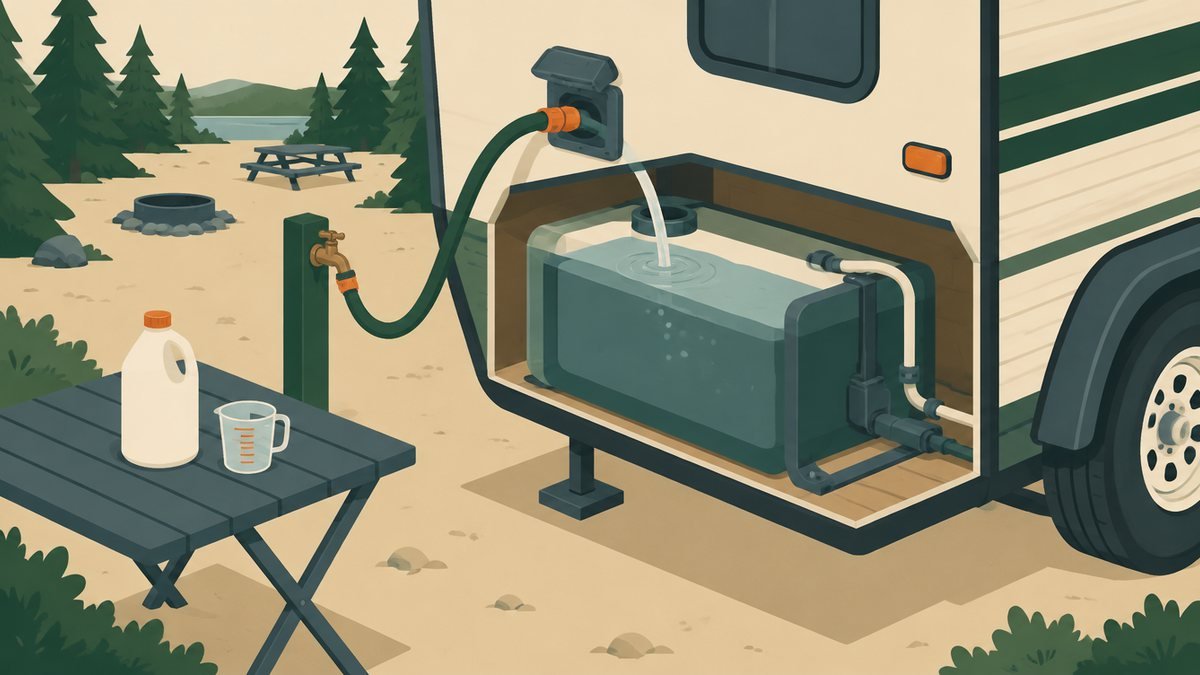
To sanitize your RV’s fresh water tank and lines properly, you need bleach, time and a thorough rinse, and it’s one of the simplest ways to protect your health and your plumbing. Water sitting in a tank, pump and lines for weeks or months can develop a stale taste, odors and bacterial growth, even if it started out clean. A regular sanitizing routine, especially at the start of the season, after storage, or after you’ve put in a new tank or filter, gives you a clean starting point.
This guide explains what an RV fresh water tank and its plumbing do, how to sanitize them step by step, how often to do it, and how to deal with lingering odors afterward.
Why you should sanitize your RV fresh water system
Your RV’s fresh water system is a closed set of parts that rarely gets a full cleaning: the RV water tank itself, the pump and its strainer, the water lines, the faucets and the water heater. Warm, still water is exactly where bacteria like to grow, and a film can build up on the inside of the tank over time.
You’ll want to sanitize:
- At the start of each camping season, or after the RV has been stored for a while.
- After winterizing and de-winterizing, because RV antifreeze needs to be flushed out and the system sanitized afterward.
- After repairs or new parts, such as a new pump, fresh tank, hose or water heater.
- If the water smells or tastes bad, or if you suspect it has been contaminated.
- If you buy a used RV, since you don’t know how well it was maintained.
What you need
- Unscented household bleach. Use plain bleach without added scents, thickeners or cleaners. Check the label for the concentration, because that affects how much you need.
- A clean funnel, measuring cup and a clean container for mixing.
- A drinking water hose for refilling. See our guide to the heated RV water hose if you camp in the cold.
- Gloves and eye protection, because bleach can irritate skin and eyes.
How to sanitize an RV fresh water tank, step by step
Always check your RV owner’s manual first. Manufacturers sometimes give specific amounts or steps for their systems. The method below follows the most common approach for tanks that fill from a gravity fill port.
Step 1: Drain the system
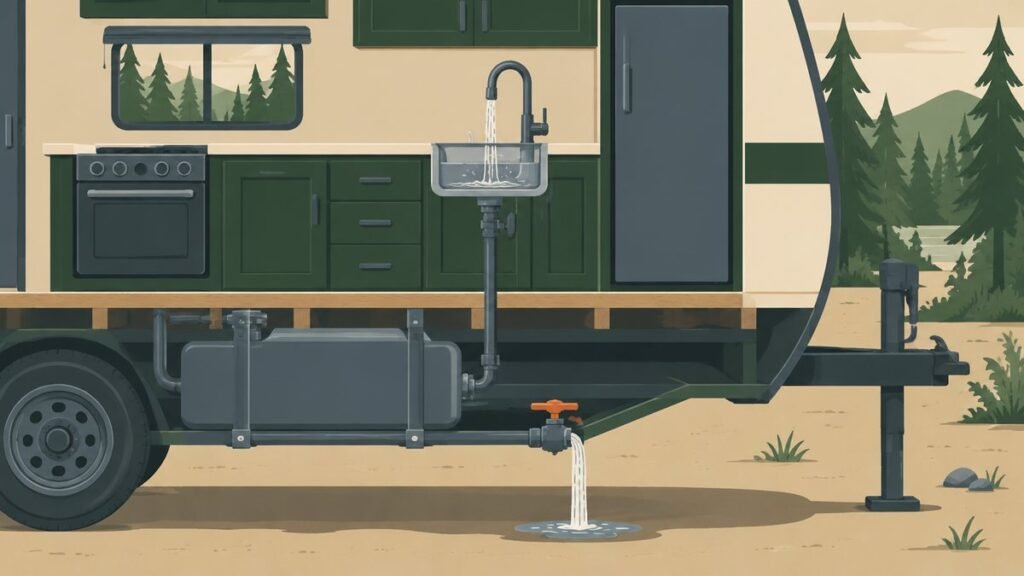
Open the fresh tank drain and low-point drains, and open the faucets so the system empties completely. Drain the water heater too, with the heater off and cool. Remove or bypass any inline water filter cartridges; chlorine can damage some filters, and they would just soak up the solution.
Step 2: Close the drains and set the bypass
Close the drains and the faucets. If you want to avoid putting bleach solution through the water heater, set the bypass valves. Some owners prefer to sanitize the heater too; follow your manual either way.
Step 3: Calculate and mix the bleach solution
A commonly used guideline is about 1/4 cup of unscented household bleach for every 15 gallons of tank capacity, though the strength of the bleach and your manufacturer’s guidance matter. Mix the measured bleach in a clean container with about a gallon of fresh water before adding it to the tank. Don’t pour concentrated bleach straight into the tank.
Step 4: Add the solution and fill the tank
Pour the diluted mixture into the tank through the fill port using a clean funnel. Then fill the tank completely with fresh drinking water, so the solution mixes and reaches the top of the tank.
Step 5: Run the solution through the lines
Turn on the water pump and open each faucet, hot and cold, one at a time, until you smell bleach. Do this at the kitchen and bathroom faucets, the shower and the outside shower. Flush the toilet a few times to treat that line. Then close the faucets.
Step 6: Let it sit
Leave the solution in the tank and lines for the time recommended by your manual or the bleach label. Many owners let it sit for several hours; a common range is a few hours up to overnight. Don’t use the water during this time.
Step 7: Drain and flush
Drain the entire system, again opening the fresh tank drain, low-point drains and every faucet. Refill the tank with clean fresh water and run the pump and faucets until the water runs clear and the chlorine smell is gone. You may need to repeat the rinse several times. Drain and rinse again if you still smell bleach.
Step 8: Reinstall filters and refill
Put your water filter cartridges back, close the drains, and fill the tank with fresh drinking water. Run each faucet briefly to purge air.
How often should you sanitize the fresh water tank?
A good habit is once a year, at the start of the season, plus any time you suspect a problem or the RV has been sitting unused. Full-timers and frequent travelers may do it more often. If you only use water from tanks you fill from a known clean source, and the RV isn’t stored for long, a yearly routine is usually enough. If you’re unsure, follow your manufacturer’s maintenance schedule.
Tips to keep the water fresh between sanitizing
- Don’t leave water in the tank during long storage. Drain the system when you put the RV away. See our step-by-step winterizing guide for cold-weather storage.
- Use a drinking water hose, not a garden hose, and store it capped and off the ground.
- Use an inline filter at the city water inlet to catch sediment. Our guide to the RV water filter explains the options.
- Keep the fill port clean, and wipe the cap before filling.
- Run the water for a moment before drinking if the RV hasn’t been used for a few days.
Dealing with odors and taste problems
If you still notice a smell or taste after sanitizing, look at the likely causes:
- Leftover chlorine or antifreeze. Keep rinsing until the system runs clear and neutral.
- Rotten egg smell from hot water only. This is often related to the water heater, especially one with a magnesium anode rod. Flushing the tank and sanitizing usually helps.
- Musty smell from the tank. Mold or biofilm may need a second round of sanitizing, or a dedicated tank cleaner designed for RV use.
- Plastic or rubber taste. New hoses and tanks sometimes taste of plastic at first. Flushing several times usually fixes it.
Safety notes
Bleach is a strong chemical. Wear gloves and eye protection, work in a ventilated area, and never mix bleach with other cleaning products, especially ammonia or acidic cleaners, because this can release harmful gases. Keep children and pets away from the area, and don’t drink or cook with water from the system until it has been rinsed and no longer smells of chlorine. Dispose of the rinse water where local rules allow, and don’t dump large amounts of chlorinated water onto the ground near streams or plants.
Frequently asked questions
Can I use something other than bleach to sanitize an RV fresh water tank?
Some owners use other products made for RV tanks. Whatever you choose, follow the product directions and rinse thoroughly. Bleach remains the most commonly recommended option because it’s inexpensive and effective when used correctly.
Do I need to sanitize if I only use city water?
The fresh tank still holds water when you use it, and the lines and water heater can develop odors even with city water. Sanitizing at the start of the season is still a good idea, especially after storage.
Is it safe to drink the water after sanitizing?
Yes, as long as you’ve rinsed the system until there’s no chlorine smell or taste. If you have any doubt, rinse again.
How do I sanitize the water heater?
Many owners sanitize the heater by letting the bleach solution fill it before the soak time, then draining it afterward. Check your owner’s manual, since some manufacturers prefer you bypass the tank.
Sources
Your own manual has the last word on your exact model. The sources below are good places to confirm the general details.