
An RV water pressure regulator is a small brass fitting that costs far less than the plumbing it protects. It screws onto the campground spigot and limits the pressure of the water going into your RV, so a high-pressure supply doesn’t blow out fittings, split a hose or damage your water heater. If you hook up to city water at campgrounds, this is one accessory you should treat as essential rather than optional.
This guide explains why campground water pressure can be a problem, how a pressure regulator works, how to choose and install one, and what to check when your water pressure seems wrong.
Why campground water pressure is a risk
Household plumbing in a house is built to handle typical municipal water pressure. An RV’s plumbing is usually thinner and lighter: plastic fittings, flexible lines and small valves, often designed for lower pressure than the supply from a campground spigot. Campground pressure isn’t consistent. It can change from site to site and even from morning to evening depending on how many people are using water, how the park’s system is designed and where your site is located.
When pressure is too high, you may see:
- Leaking or popped fittings behind walls and under cabinets.
- Burst or bulging water hoses.
- Dripping faucets or a relief valve on the water heater that keeps opening.
- A water pump that cycles or a toilet that keeps running.
Damage can occur while you’re away from the RV, so the damage isn’t always obvious until you find water inside.
How an RV water regulator works
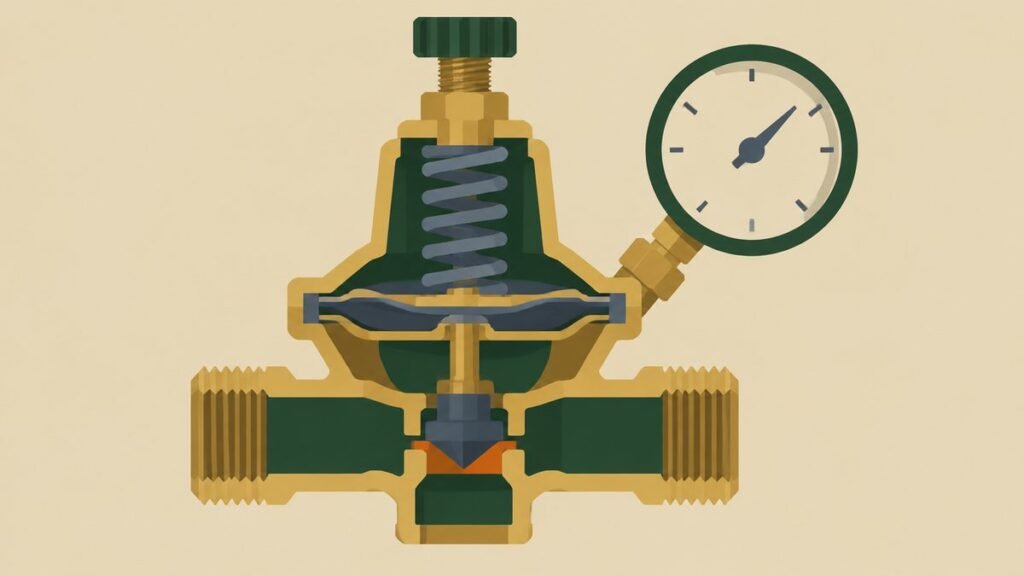
A pressure regulator uses a spring-loaded diaphragm and a valve to reduce incoming pressure to a safe, steady level. When inlet pressure is high, the diaphragm moves to partly close the valve, limiting what flows through. When pressure falls, the valve opens further. The result is a more consistent output pressure.
Typical designs are:
- Fixed regulators, set at the factory to a specific pressure, often described as a safe level for RVs. They’re simple and reliable.
- Adjustable regulators, with a screw that lets you change the output pressure. They’re handy, but it’s easy to set them too high.
- Regulators with a gauge, which show the water pressure on the output side so you can see what your RV is actually getting.
Why you need an RV water pressure regulator
A regulator protects the whole system: the hose, the fittings at the inlet, the lines, the water heater, the faucets and the toilet valve. It also makes showers and faucets feel steadier. Because the plumbing is behind walls and floors, a failure can mean water damage and costly repairs, so the small cost of a regulator is well worth it.
Even if a particular campground seems to have gentle water pressure today, you can’t count on it tomorrow. Many experienced RV owners attach the regulator at the spigot every time, without exception.
Where to install the regulator
Place the regulator at the spigot end of the hose, directly on the campground faucet, before the hose. This way, the hose, the RV inlet and your plumbing only see reduced pressure. Mounting it at the RV end protects the RV’s plumbing but leaves the hose exposed to full campground pressure.
The typical hook-up order, from the spigot, is:
- Spigot.
- Pressure regulator (and a filter, if you use one).
- Drinking water hose.
- RV city water inlet.
If you also use an RV water filter, check the manufacturer’s recommended order, since regulators and filters are commonly installed at the spigot with the filter before or after the regulator depending on design.
How to choose a regulator
- Output pressure. Choose a regulator that limits pressure to a level appropriate for your RV. Check your owner’s manual for the maximum pressure your plumbing is designed for.
- Materials. Brass or stainless steel bodies hold up better than plastic. Look for lead-free construction that’s certified for drinking water.
- Flow rate. Make sure it passes enough water for showers and appliances without a big drop.
- Gauge. A built-in gauge lets you confirm what the regulator is doing, and it also shows you the pressure before you connect.
- Adjustability. Adjustable models give flexibility, but only if you know the right setting. A fixed model is simpler.
- Fittings. Garden hose threads on both ends are standard, and many have swivel connections.
How to install an RV water pressure regulator
- Turn off the spigot.
- Check that the washer is in place and in good shape inside the regulator’s inlet.
- Screw the regulator onto the spigot hand-tight, then give it a slight turn with pliers if needed. Don’t over-tighten.
- Attach the hose to the regulator’s outlet.
- Open the spigot slowly and check for leaks.
- If you have a gauge, check the pressure reading once water is flowing.
If you camp in cold weather, protect the regulator from freezing too. Our guide to the heated RV water hose covers insulating the spigot and fittings.
Testing and troubleshooting
Water pressure too low
If pressure seems weak, check whether the problem is the campground supply, the regulator or something inside the RV. Try removing the regulator briefly to see whether pressure improves, which can indicate a clogged or stuck regulator. Also check for clogged filters, kinked hoses and clogged faucet screens. If you’re using your tank instead of city water, a failing pump may be the cause; see our guide to the RV water pump.
Water pressure too high
If hoses bulge, fittings leak or the relief valve drips, the regulator may be set too high, failing or missing. Replace a regulator that doesn’t hold pressure steady.
Pressure creeps up when water isn’t flowing
Some regulators let pressure build on the outlet side when nothing is flowing. If your hose swells when the faucets are closed, the regulator may be failing.
Leaks at the connections
Check the washers and replace any that are worn or flattened. Thread seal tape isn’t usually required on hose threads, but follow the manufacturer’s instructions.
Care and replacement
- Disconnect the regulator when you leave, especially in freezing weather.
- Drain it and store it dry between trips.
- Replace washers regularly.
- Replace the regulator if it’s damaged, corroded or no longer holds a steady pressure.
Safety notes
High water pressure can damage fixtures, but sudden bursts of water can also create slip hazards inside the RV. Turn off the water at the spigot if you find a leak. In cold weather, don’t leave brass fittings full of water to freeze. If you suspect water has gotten inside walls or floors, dry it quickly to prevent mold, and consider a professional inspection for hidden damage.
Frequently asked questions
Do I need a regulator if my RV has one built in?
Some RVs have an internal regulator, but many owners still use an external one at the spigot to protect the hose too. Check your RV’s documentation.
What pressure should my RV water be?
Your owner’s manual gives the right range for your RV. Many regulators are designed to limit pressure to a level suitable for typical RV plumbing.
Can I use a regulator with a water softener or filter?
Yes, but check the order and fitting compatibility. Regulators are typically installed at the spigot, with other equipment after them.
How often should I replace a pressure regulator?
There’s no fixed interval. Replace it if it leaks, if the gauge reads strangely or if you notice swollen hoses or inconsistent pressure.
Sources
These public agencies and standards organizations publish guidance that is a good place to confirm the details on this topic.