RV refrigerator repair often turns out to be less dramatic than it first looks. A fridge that isn’t cooling, runs warm in hot weather, trips an error light or won’t light on propane is frustrating, especially with a cooler of groceries in the balance. But many problems come down to a handful of causes you can check yourself before calling a service center: the RV isn’t level, the power or propane supply is weak, airflow is blocked or the unit is simply working too hard.
This guide explains how the most common RV refrigerators work, gives a step-by-step checklist for a Norcold RV refrigerator not cooling (and other absorption models), and shows which repairs are for owners and which belong to a technician.
How an RV refrigerator works
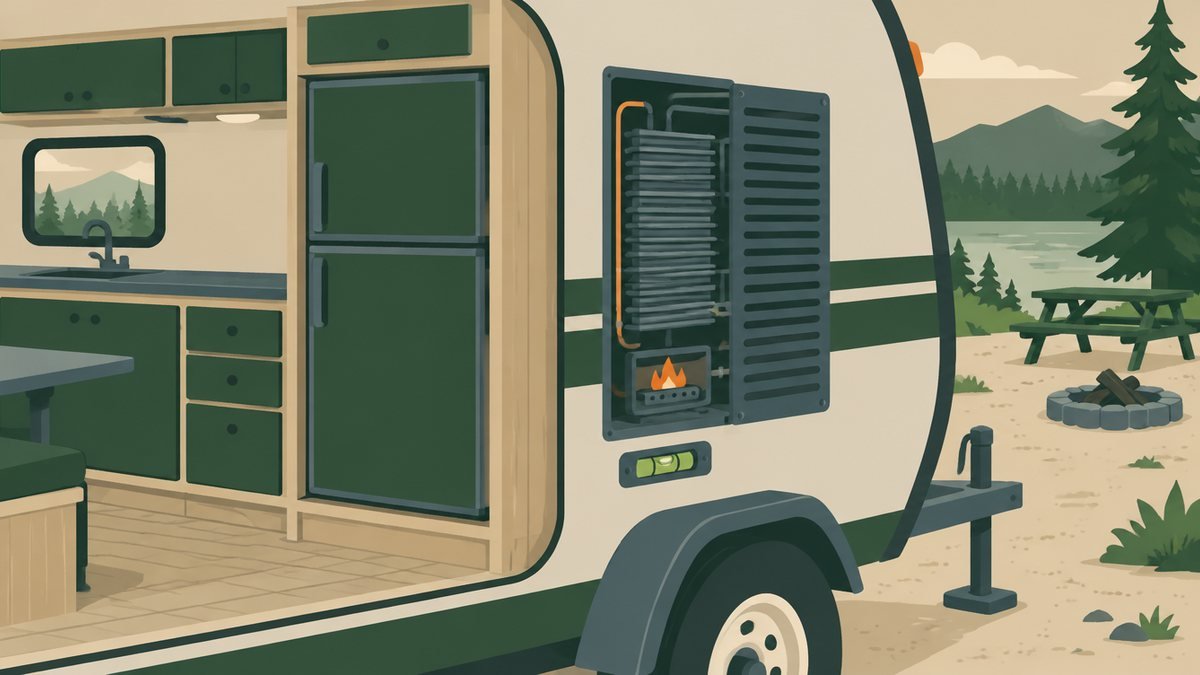
Most RV refrigerators are absorption models. They have no compressor and no moving parts in the cooling system. Instead, a heat source, either a propane burner or an electric heating element, boils a solution of ammonia and water in a sealed set of tubes. That sets off a cycle of evaporation and condensation that pulls heat out of the refrigerator compartment and releases it through cooling fins at the back, which vent outside through a panel on the side or roof of the RV.
Because the system depends on gravity and heat, three things matter a great deal: the refrigerator must be level, the heat source must be steady and air must flow freely over the cooling fins. If any of the three is off, cooling suffers. For a comparison of the different types, see our guide to RV refrigerator types.

RV refrigerator repair checklist: start here
Work through these in order. Most problems show up in the first few steps.
1. Check the temperature setting and the doors
A setting that’s too warm is an easy miss, especially after a change in weather. Hot outdoor temperatures mean the refrigerator may need a colder setting to hold its target. Check the doors, too. Norcold’s support guidance notes that a door left open for more than a couple of minutes can cause cooling trouble, and a door that sags, a worn gasket or a bad door switch can let warm air in.
2. Make sure the RV is level
Absorption cooling depends on liquid flowing through the tubes by gravity. If the RV is out of level, the liquid can pool and the unit may stop cooling. Norcold’s guidance for its gas absorption models gives limits of about three degrees side to side and six degrees front to back, and other makers publish their own figures, so check your manual. Level the RV, then give the refrigerator several hours to recover; it won’t cool instantly.
3. Check the power supply
On electric operation, a weak supply is a common cause of poor cooling. Norcold’s support pages say its AC models need a minimum of about 115 volts at the unit and recommend a dedicated power source. Low campground voltage, a failing converter, an undersized extension cord or a loaded circuit can all starve the heating element. For DC-powered models, check the 12-volt supply and connections, and see our guide to the 30 amp RV plug for shore power basics.
4. Check the propane supply and the burner
On propane operation, make sure the tank valves are open, the tanks have fuel and the regulator isn’t failing. A refrigerator that won’t light or won’t stay lit on gas may have a dirty burner or orifice, a weak spark, a failing thermocouple or a problem with the gas supply. Burner and gas-valve repair is work for a qualified technician, because it involves propane. Our guide to the RV propane gas detector explains the alarm that protects you if a leak ever occurs.
5. Check the airflow around the cooling unit
The cooling fins at the back need to shed heat. Make sure the vent panels, inside and out, are clear of nests, debris and leaves, and that nothing is stored blocking the airflow. In very hot weather, shading the refrigerator vent side of the RV can help, and some owners add a small fan at the cooling fins to move more air.
6. Look for frost
A thick coating of frost on the evaporator fins blocks airflow inside the refrigerator. Turn the refrigerator off, leave the doors open with towels below to catch the water, let the frost melt, dry it all out and restart.
7. Read the error lights
Many models flash lights or show codes. A slow flash may mean low DC power; a fast flash may point to a sensor problem; a solid light may mean a safety sensor has tripped. The meanings differ by model, so use the code list for yours. Don’t bypass any safety sensor. Altering or defeating a safety device can create a fire hazard.
8. Give it time
After you’ve fixed a problem, a refrigerator can take several hours, sometimes up to a day, to reach full temperature. Don’t judge the repair by the first thirty minutes.
Norcold RV refrigerator not cooling: extra points
If you have a Norcold, the model number matters. It’s printed on a tag inside the refrigerator, and Norcold’s support pages (now hosted by Thetford) list error codes and troubleshooting by model. A few general points from that guidance:
- Gas absorption models need to be level and have clear airflow, and in freezing weather may need a cold-weather kit to run properly.
- AC models like a strong, dedicated power supply.
- Don’t modify the safety sensors, and don’t try to repair the sealed cooling unit yourself. If the cooling unit has failed, a repair or replacement should be done by a qualified technician.
RV refrigerator repairs: what you can do and what you can’t
Reasonable DIY checks
- Cleaning vents and cooling fins.
- Checking and adjusting the level.
- Replacing door gaskets and a worn door switch.
- Testing the power supply and replacing a faulty cord or breaker.
- Defrosting and cleaning the interior.
- Replacing a 12-volt fuse.
Leave to a technician
- Propane burner, orifice, thermocouple and gas-valve repairs.
- Control board, thermistor and heating element replacement unless you have electrical experience.
- Any repair on the sealed cooling unit, which contains pressurized chemicals.
- A refrigerator that has been run while out of level for a long time and no longer cools, since the cooling unit may be damaged.
When repair isn’t worth it
Age and the cost of a cooling unit repair matter. If the cooling unit has failed, many owners compare the cost of a repair with a replacement refrigerator, or switch to a different type. Our guide to RV refrigerator replacement covers that decision. Ask a shop for a written estimate and the reasons behind it before deciding.
Keeping your RV refrigerator healthy
- Level the RV before you turn on the refrigerator, and let it cool down before loading it.
- Pre-chill food and drinks before putting them in.
- Don’t overload the refrigerator, and leave space for air to circulate.
- Keep the vents clean and the doors latched while driving.
- Defrost and clean the interior regularly.
- Prepare it for storage: empty it, clean it and prop the doors open to prevent mildew. See our guide on how to winterize an RV for cold-weather storage.
Safety notes
An absorption refrigerator burns propane when running on gas, so it produces carbon monoxide like any fuel-burning appliance. Keep working carbon monoxide and propane detectors in the RV, never block the exterior vent panel or the flue, and don’t run the refrigerator on propane while refueling or in an enclosed space. If you smell propane, put out flames, leave the RV, and call 911 or your propane supplier from a safe distance. Disconnect power before opening any panel, and leave gas and sealed-system repairs to a qualified technician.
Frequently asked questions
Why is my RV refrigerator not cooling?
The most common causes are being out of level, weak power or propane supply, blocked airflow, a too-warm setting or an open door. Work through the checklist above before assuming the cooling unit has failed.
How long does an RV refrigerator take to cool down?
Several hours, and sometimes up to a day, depending on the model, the outside temperature and what’s inside. Start it the day before a trip.
Can I run my RV refrigerator while driving?
Many owners run it on 12-volt power or electric power from an inverter or generator, while propane use while driving is restricted in some places and at some locations such as fuel stops and tunnels. Check your manual and local rules.
Should I replace or repair my RV refrigerator?
If the problem is a power, level, airflow or door issue, repair is straightforward. If the sealed cooling unit has failed, compare a written repair estimate with replacement.
Sources
Specifications differ between models, and your manual lists yours. These are the sources this guide draws on.