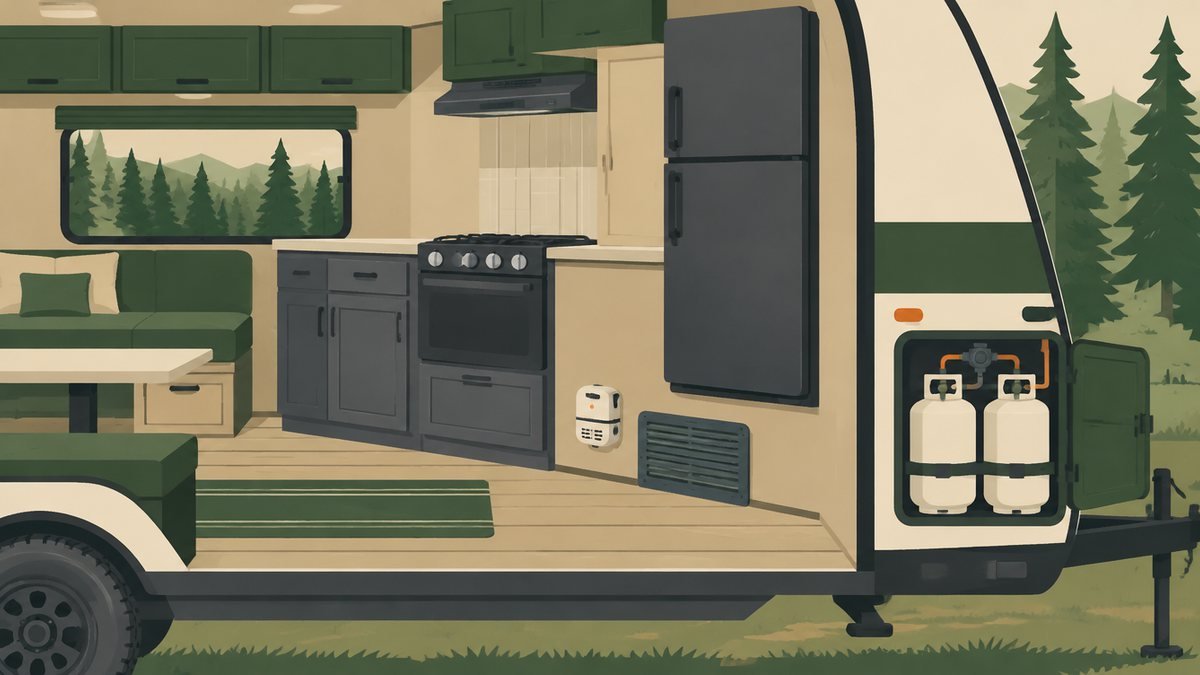
An RV propane gas detector is one of the few devices in your rig that can warn you about a problem while you’re asleep. Propane runs your furnace, water heater, stove and, in many RVs, the refrigerator, and a small leak inside a closed space can build into a serious fire or explosion hazard. The detector, often called an RV propane detector or LP detector, is the alarm that tells you a leak may be happening before you smell it, or when you can’t.
This guide explains how an RV propane gas detector works, where it should be mounted, how to test it, what its beeps and lights might mean, and when to replace it.
What an RV propane detector does
An RV LP detector is a small, hard-wired or battery-assisted alarm that senses propane (liquefied petroleum gas, or LP gas) in the air and sounds an alarm when it reaches a certain level. Most are powered by the RV’s 12-volt system, so they keep working when you’re running off the house battery.
It’s a different device from a carbon monoxide alarm. A propane detector senses unburned fuel gas, while a carbon monoxide alarm senses a poisonous gas produced when fuel burns incompletely. A well-protected RV has both, and neither replaces the other. Many manufacturers also sell combination units, but check that any combined unit is listed for both gases.
Why propane detectors sit low on the wall
Propane is heavier than air. If it leaks inside an RV, it tends to sink and collect near the floor rather than rise. That’s why a propane detector is normally mounted low on a wall, close to the floor, and within reach of the places a leak is most likely, such as near the furnace, the stove and the water heater area. Carbon monoxide, which mixes with air, is detected differently, so CO alarms generally go higher up. Always follow the placement instructions in your detector’s manual and your RV manufacturer’s guidance.
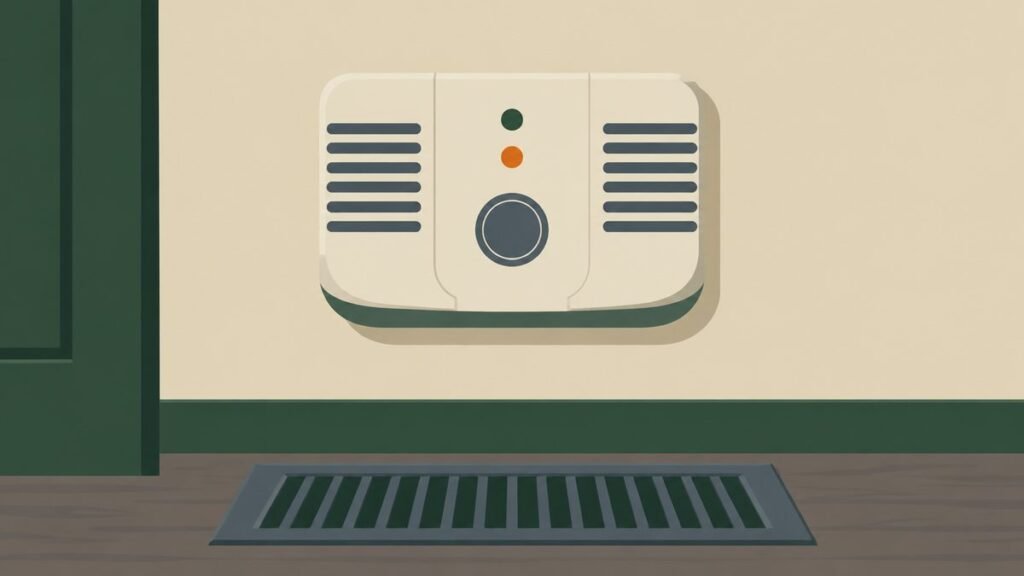
How to test your RV propane gas detector
Test it regularly, at least at the start of each trip and any time the RV has been in storage. The details vary by model, so check your manual, but the general routine is:
- Make sure the detector has power. A green or “power” light usually shows it’s on. If there’s no light, check the 12-volt supply, the fuse and the connection.
- Press the test button. Most detectors have one. It should sound the alarm and light the indicator. Release it and confirm it returns to normal.
- Check the alarm volume. You should be able to hear it from the bedroom with the door closed.
- Note the date. Detectors have a limited service life, and many are marked with a manufacture date or a replace-by date.
The test button confirms the circuit and horn work. It does not prove the sensor can detect gas, which is why age matters.
Never test with a real leak
Don’t release propane to test a detector, and don’t use open flames or lighters near it. Use only the test button, or a test method that your detector’s manufacturer specifically approves.
Why does my RV propane detector beep?
Detectors communicate with different beeps and lights, and the meaning varies by brand and model, so check your manual for the exact codes. In general, there are four situations:
- Alarm sounds continuously. Treat it as a real leak until proven otherwise. See the safety steps below.
- Intermittent chirp or beep. Often a warning about low voltage, a failing sensor or a detector reaching the end of its life.
- Warm-up beeps after power is restored. Many units need a short warm-up period when first powered.
- False alarms. Some detectors can be set off by aerosol products, cleaning fumes, cooking vapors or certain chemicals. Ventilate the RV, and if it keeps happening, investigate before assuming it’s a false alarm.
If a detector chirps and you can’t identify why, don’t just remove the battery or disconnect it. Find out which condition it’s reporting.
What to do if the detector alarms
Take every alarm seriously. The standard safety response is:
- Put out all flames and pilot lights, and don’t operate any switches, appliances or lights that might create a spark.
- Get everyone, including pets, out of the RV.
- If you can do it safely without going back in, close the valves on the propane cylinders or tank.
- Stay out and away from the RV, and call 911 or your propane supplier from a safe distance.
- Don’t re-enter until a qualified person has checked the system and said it’s safe.
Never look for a leak with a flame. A leak test should be done by a qualified RV or propane technician using proper equipment.
How long do RV propane detectors last?
Propane sensors wear out. Contaminants, humidity, age and exposure to chemicals gradually reduce their ability to detect gas. For that reason, detectors have a limited service life, which the manufacturer states on the label or in the manual, and which is often measured in years from the manufacture date. When a detector reaches that age, replace it even if it still seems to work. Replace it sooner if it fails a test, gives repeated error signals or has been exposed to a leak, fire, smoke or heavy chemical fumes.
Replacing an RV propane detector
- Choose a compatible unit. Match the voltage (12 volt), the mounting pattern and the wiring. Detectors designed for RVs are the right choice. Household propane or natural gas detectors may not be suitable for an RV’s 12-volt system.
- Shut off power. Disconnect the 12-volt supply to the detector before working on it.
- Remove the old unit, note the wire positions and connect the new one the same way, following the instructions.
- Mount it low, in the position the manual specifies, away from direct drafts, vents or places where moisture collects.
- Restore power, wait for warm-up and test using the test button.
- Record the installation date, for example on a sticker inside a cabinet.
If you aren’t confident with wiring, a qualified RV technician can replace it quickly.
Things that affect detector performance
- Low house battery voltage. A weak battery can cause low-voltage warnings. Our guide to the deep cycle RV battery explains how to keep the system healthy, and the RV battery charger and disconnect switch article covers what happens when you turn the system off. Remember that turning off the battery disconnect also turns the detector off.
- Dirt and humidity. Keep the vents clean and dry.
- Chemical vapors. Aerosols, solvents and cleaners can foul or trigger sensors.
- Insects. Small insects can block sensor openings in some units.
Generators, heaters and other fuel sources
Your propane detector doesn’t replace the care you take with other fuel-burning gear. Never run a generator inside or near the RV’s openings, and keep working CO alarms in the sleeping area. See our guide to RV generators for more on keeping exhaust away from your living space.
Frequently asked questions
Do I need both a propane detector and a carbon monoxide detector?
Yes. They detect different gases and protect against different hazards. Many RVs ship with both, and you should check each one regularly.
Can I turn my propane detector off to stop a beep?
Don’t disable it without finding the cause. If it’s beeping, it’s reporting something: a low battery, a fault, the end of its life or gas. Fix the cause, or replace the unit.
Where should a propane detector be installed?
Low on a wall near the floor, in the location recommended by the manufacturer, since propane is heavier than air and sinks.
How often should I test my propane detector?
At least at the start of each trip, and after any storage period. Many owners also test it monthly during extended stays.
Sources
These public agencies and standards organizations publish guidance that is a good place to confirm the details on this topic.