
RV generator repair often turns out to be RV generator maintenance that was put off. A generator that won’t start, runs rough, surges, loses power or shuts down is most often telling you about old fuel, a dirty filter, a worn spark plug, low oil or a clogged carburetor, problems you can check yourself with basic tools. Knowing the common causes, and which problems need a technician, saves time and money, especially when you’re far from a shop.
This guide covers regular maintenance, a troubleshooting checklist for the most common problems and the point at which you should stop and call for help.
Why generators fail
A generator is a small engine that’s used occasionally, which is hard on engines. The most common causes of trouble are:
- Sitting unused. Fuel goes stale, carburetors gum up, seals dry out and batteries run down.
- Not enough maintenance. Dirty oil, clogged air filters and old spark plugs reduce performance.
- Running under light load for long periods or never running it under load, which can cause carbon buildup on some engines.
- Poor fuel quality or a dirty fuel system.
- Overheating or blocked cooling, from debris, a blocked vent or poor airflow in the compartment.
Basic generator maintenance
Follow the intervals in your owner’s manual, which are the only reliable guide for your model. In general, maintenance falls into these categories.
Check and change the oil
Check the oil level before each use, and change it at the intervals in the manual. Low oil can trigger an automatic shutdown, and old oil wears the engine. Use the oil type and weight the manufacturer recommends.
Clean or replace the air filter
A clogged air filter starves the engine and causes rough running and loss of power. Clean or replace it as the manual says, and more often in dusty conditions.
Replace the spark plug
A worn or fouled spark plug causes hard starting and misfires. Replace it at the recommended interval with the specified type, set to the correct gap.
Fuel system care
Use fresh fuel, and use a fuel stabilizer if the generator will sit for more than a short time. Before long-term storage, follow the manufacturer’s guidance, which may involve running the fuel out of the carburetor. Replace fuel filters as directed.
Exercise the generator
Built-in generators in particular benefit from regular use under load. Many manuals recommend running them periodically, with a moderate load, for a set period. Running under load helps keep the engine and the fuel system in good shape.
Check cooling and exhaust
Keep vents and cooling fins free of dust, leaves and debris. Inspect the exhaust system for leaks and damage, since exhaust leaks are a carbon monoxide hazard.
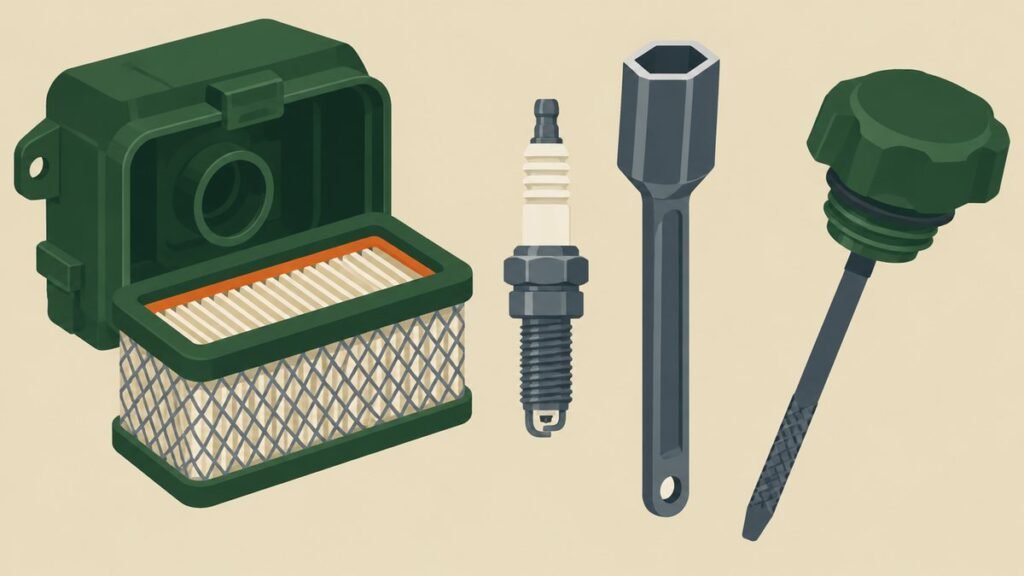
RV generator repair: troubleshooting common problems
Generator won’t start
- Check the fuel. Is there enough? Is the fuel fresh? Is the fuel valve open?
- Check the oil level. Many generators won’t start with low oil.
- Check the switches and controls. Confirm the engine switch is on and the choke is set as the manual describes.
- Check the battery on electric-start models, including the connections and charge.
- Check the spark plug. Remove it, inspect it and replace it if it’s dirty or worn.
- Check for a clogged carburetor or fuel filter, especially after storage.
- Check for a tripped breaker or overload shutoff. Reset it after unplugging loads.
Generator starts but dies
Likely causes include low oil triggering the shutdown, a fuel supply problem, a clogged fuel filter or vent, or an overloaded unit. Try starting it with no load connected.
Generator surges or runs rough
Surging, where the engine speed rises and falls, often points to a dirty carburetor, stale fuel, a partly clogged fuel filter or a dirty air filter. Cleaning or rebuilding the carburetor often cures it, and fresh fuel can help.
Generator runs but there’s no power
Check the generator’s breakers and any reset buttons, then the cords and the RV’s transfer switch. On some models, a failed capacitor or a bad connection inside the generator can cause no output. If the engine runs but you have no AC output, an electrician or technician should examine the generator end.
Generator loses power under load
The generator may be overloaded, or the engine may not be producing full power due to a dirty air filter, a worn spark plug, a clogged exhaust or spark arrestor, or a fuel problem. At higher elevations, engines also produce less power, and some can be adjusted by a technician.
Smoke, smell or unusual noise
White or blue smoke can indicate oil burning, black smoke often means a rich mixture or a dirty air filter, and a loud knocking or grinding may mean serious engine damage. Shut the generator off and don’t run it until you know the cause.
Built-in generator specifics
Built-in generators have a few extra points to check:
- The fuel supply, which can be shared with the chassis or from propane, may shut off at a low fuel level to keep enough fuel for driving.
- The start battery and the starting circuit, including the remote switch and wiring.
- The exhaust and the compartment, for leaks and debris.
- The generator’s hour meter, if it has one, for maintenance schedules.
Many owners have the oil, filters and spark plugs changed at a shop, since access can be tight.
Carburetor problems
A clogged carburetor from stale fuel is among the most common repair issues. Signs include hard starting, rough running and surging. Cleaning the carburetor involves removing it, disassembling it and cleaning the jets and passages. If you aren’t comfortable doing this, a small engine shop can do it. Using fresh fuel, stabilizer and, in some cases, running the carburetor dry for storage helps prevent the problem.
When to call a professional
- Engine knocking, grinding or severe vibration.
- No output even though the engine runs normally.
- Electrical faults, burning smells or tripped breakers that won’t stay reset.
- Fuel leaks.
- Exhaust leaks, which can be a carbon monoxide hazard.
- Repairs on built-in generators that involve the fuel system, wiring or mounting.
Safety notes
Carbon monoxide is the biggest risk, so make sure your exhaust system is intact, and have working CO alarms in the RV. Let the engine cool before working on it, and disconnect the spark plug wire or the battery when you service the generator. Gasoline is flammable, so work away from sparks and flames. Don’t run the generator in an enclosed space. Disconnect loads and shore power connections before servicing the electrical side, and don’t work on live electrical parts. For more on choosing and using one, see our guide to RV generators, and check the deep cycle RV battery guide if you charge your batteries with one.
Frequently asked questions
How often should I service my RV generator?
Follow the schedule in your owner’s manual. It’s usually based on running hours and time, so even a generator that’s rarely used needs periodic care.
Why won’t my generator start after sitting?
Stale fuel and a gummed carburetor are the most common causes. Try fresh fuel, check the oil and spark plug, and clean the carburetor if needed.
Is it OK to run my generator with no load?
Occasionally, but many manuals recommend running under some load, because long periods at no load can cause carbon buildup on some engines.
Can I repair my generator myself?
Basic maintenance and simple checks are suitable for most owners. Electrical, fuel system and internal engine repairs are best left to a professional unless you have experience.
Sources
Model details differ, so follow the instructions that came with your equipment. These are the sources behind this guide.