
RV generators give you AC power when there’s no shore power at the campsite: enough to run an air conditioner, charge your batteries, run a microwave or power the whole rig while you’re boondocking. Picking the right one comes down to a few choices: inverter or conventional, portable or built-in, and the fuel it burns. And more than any other piece of equipment on your RV, a generator demands respect for one hazard, carbon monoxide.
This guide explains the main types of RV generators, how to size one for your RV, and what to consider before you buy, with safety front and center.
How an RV generator works
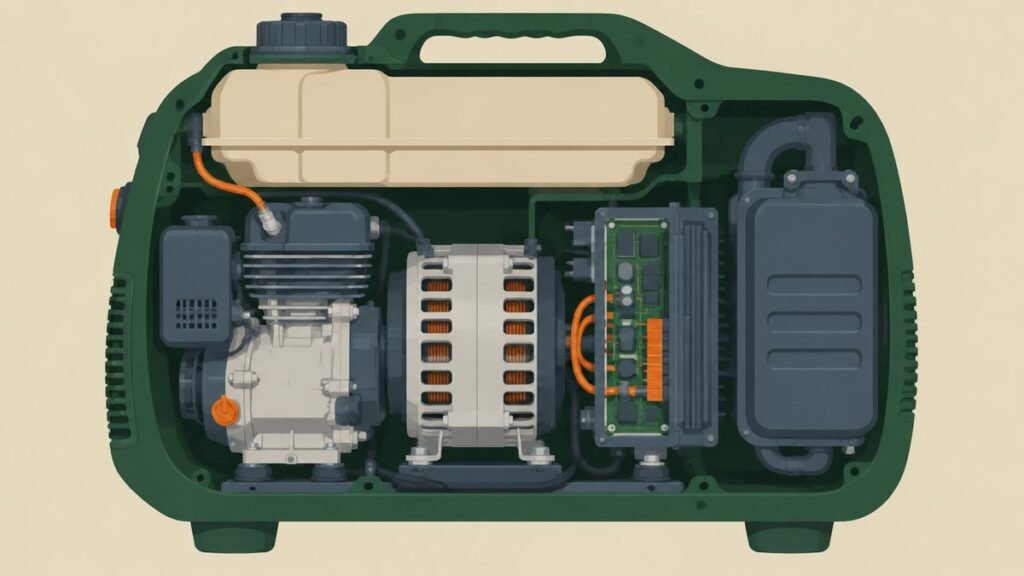
A generator uses an engine, usually gasoline, propane or diesel, to spin an alternator that produces electricity. The RV connects to the generator’s output so the converter-charger, the air conditioner, the outlets and the appliances run as they do on shore power. Generators vary in how they produce and regulate that power, which is the main difference between conventional and inverter models.
Types of RV generators
Conventional (open-frame) generators
A conventional generator runs the engine at a constant speed to keep the AC output steady. They tend to be less expensive for the power they put out, but they’re louder, heavier and less fuel-efficient at partial load, since the engine keeps running at full speed.
Inverter generators
An inverter generator, sometimes called an inverter RV generator, produces AC power, converts it to DC and then back to clean AC using electronics. The engine speed adjusts to the load, so the generator is quieter and uses less fuel when demand is low. The power is cleaner, which is better for sensitive electronics like laptops and TVs. Inverter generators usually cost more, and the same output may be physically smaller.
Built-in (onboard) generators
Many motorhomes and some larger towables have a built-in generator, fueled from the RV’s tank or from propane. They’re convenient, since they start from a switch inside, and are usually sized for the RV. They need regular maintenance and exercise, and they can be expensive to repair or replace.
Portable generators
Portable units sit on the ground next to the RV and connect with a cord. They’re a flexible, lower-cost option for towables. They’re removable, so you can use them for other purposes, and store them separately. Many parallel-capable inverter models can be linked together with a kit to add up their output.
Solar generators and battery power stations
A solar generator is really a large battery with an inverter and a solar input. It’s silent and has no exhaust, but its capacity is limited by the battery size, and it can’t match a gas generator for running high loads like air conditioners for long periods. It’s a good option for light loads, charging electronics and quiet camping.
Fuel options
- Gasoline. Widely available and common in portable generators. Gasoline can go stale, so use fresh fuel, add stabilizer for storage and keep it in approved containers.
- Propane. Burns cleaner and stores well. Propane output can be lower than gasoline on the same engine, and you need enough propane capacity.
- Dual fuel. Some portable generators run on gasoline or propane. They’re flexible, but still check each fuel’s rated output.
- Diesel. Often used in large motorhomes and fed from the RV’s own tank.
How to size an RV generator
Generators are rated in watts, and the figure to look at is how many watts you need to start and run your equipment. Add up the running watts of everything you’d use at once, then add the highest starting surge, such as an air conditioner’s startup draw.
- Air conditioners. Often the biggest load. Their starting surge is higher than their running draw, so check the label on your unit.
- Microwave, hair dryer, coffee maker and electric heaters. Each can draw a lot of power. You may need to run them one at a time.
- Converter-charger. It charges your batteries and adds to the load.
- Lights, TV, chargers and fans. Small loads that add up.
A 30 amp RV is limited to about 3,600 watts of total capacity at its inlet, so a generator much larger than that isn’t useful for a single 30 amp connection. A 50 amp RV can use more. See our guide to the 30 amp RV plug to understand the connections. Many owners with a single air conditioner choose a generator rated in the low thousands of watts, and those with two or more air conditioners and larger appliances need a larger generator or a paralleled pair. The right size depends on your own load list, not a general number.
Features worth looking for
- A true RV-ready outlet, such as a 30 amp twist-lock outlet, so you can plug in directly without adapters.
- Low noise level, which matters at campgrounds and in quiet areas. Many campgrounds have quiet hours or limits.
- Parallel capability, so you can add a second unit.
- Electric start, which is easier than a recoil pull.
- A low-oil shutoff to protect the engine.
- Carbon monoxide shutoff, offered on some newer models. It’s an extra layer of protection, not a replacement for a CO alarm.
- Fuel run time and tank size. Check how long it runs per tank at half load.
- Weight and portability. Consider how you’ll lift and store it.
Generator safety
Carbon monoxide
Generator exhaust contains carbon monoxide, a colorless, odorless gas that can kill quickly. Never run a generator inside an RV, a garage, a tent, a compartment or any enclosed space, and never operate it close to windows, doors or vents. Place a portable generator outdoors, with the exhaust pointing away from the RV and neighboring campsites. Be aware that onboard generators can send exhaust under the RV, especially when parked next to a wall or another vehicle, or in snow.
Have working carbon monoxide detectors in the RV, and test them regularly. If an alarm sounds, or if anyone feels dizzy, nauseous or has a headache, move to fresh air and call 911.
Other safety rules
- Keep fuel in approved containers, away from the generator and ignition sources. Let the engine cool before refueling.
- Keep the generator dry and use it on a stable, level surface.
- Use properly rated cords in good condition. Don’t use damaged cords or overload circuits.
- Don’t backfeed power into the RV or an outlet without the right equipment.
- Ground the generator as the manufacturer directs.
- Follow campground rules on generator use, noise and quiet hours.
- Secure a portable generator against theft with a cable and lock.
Generators and your batteries
A generator running the converter-charger recharges your house batteries. Match the charging profile to the battery type. Our guide to the deep cycle RV battery explains how different batteries charge, and an RV generator repair and maintenance routine keeps the generator ready when you need it.
Break-in and basic care
- Follow the manual for the first oil change and the break-in period.
- Run built-in generators regularly under load, since leaving them idle for long periods can cause problems.
- Use stabilizer in stored gasoline, or run the carburetor dry before storage, if the manufacturer recommends.
- Keep air filters clean and the area around the generator clear.
Frequently asked questions
Do I need an inverter generator for my RV?
You don’t need one, but they’re quieter, more fuel-efficient at partial loads and kinder to electronics. Many RV owners choose them for camping where noise matters.
How big a generator do I need to run an RV air conditioner?
It depends on the air conditioner’s starting and running watts and what else you run. Check the unit’s label and add up your loads.
Can I run a generator while I sleep?
Only if the generator is placed and vented safely, you have working CO alarms and campground rules allow it. Many owners avoid it. Never run one in an enclosed space.
Can I use a household generator for my RV?
Portable generators are made for general use, but make sure the output, plug and safety features suit your RV. Use the correct cord or adapter, and don’t modify the generator.
Sources
Model details differ, so follow the instructions that came with your equipment. These are the sources behind this guide.