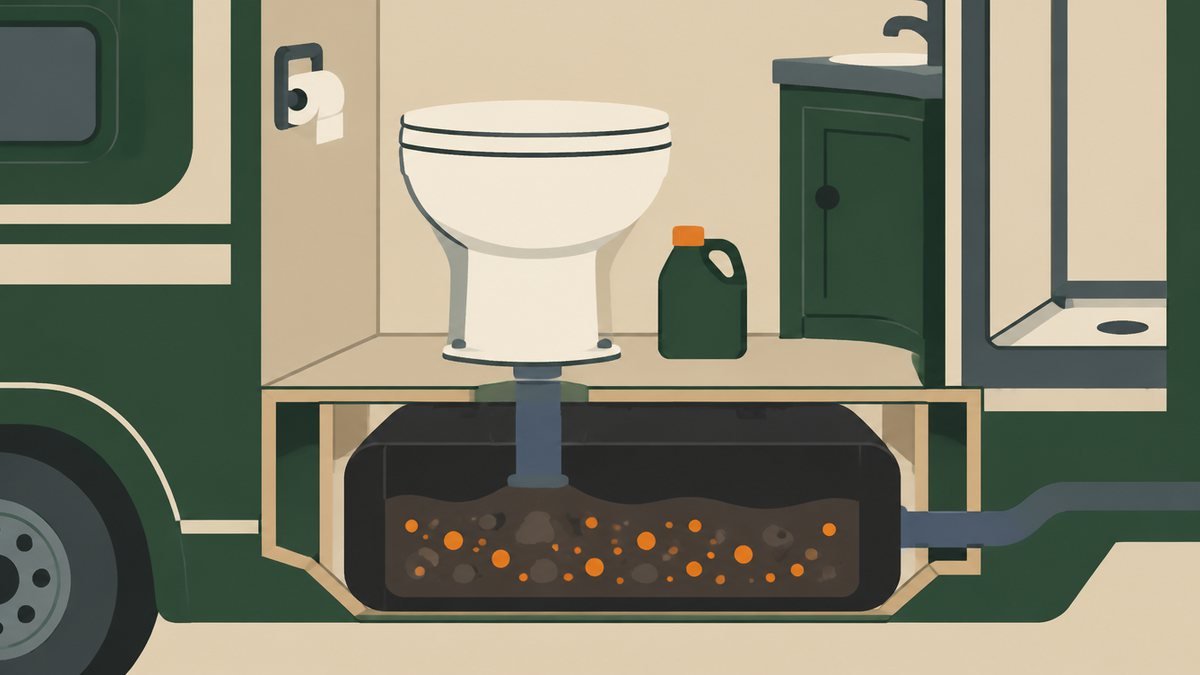
RV black tank treatment is one of the most debated subjects in RV forums, and with good reason: there are dozens of products, strong opinions and very little clear explanation of what any of them actually do. Some treatments break down waste with enzymes or bacteria. Others deodorize with perfumes or break up paper with chemicals. A few can harm your toilet seals and tank if used the wrong way. Choosing well comes down to understanding what you need the treatment to do.
This guide compares enzyme and chemical treatments, explains what each one does, and shows how to use a black tank treatment for the best results, while avoiding the products that cause more problems than they solve.
What does an RV black tank treatment do?
The black tank holds toilet waste and toilet paper until you dump it. Left alone, solids pile up, paper clumps and bacteria produce odors. A treatment is meant to help with one or more of these jobs:
- Break down waste and paper so it dumps cleanly instead of clumping.
- Control odors in the tank and the bathroom.
- Reduce residue on the walls and sensors.
- Lubricate and protect the dump valve and seals, in some formulas.
No treatment replaces the basics: enough water, a proper flush at every dump and keeping the valve closed until the tank is partly full. Our guide to the RV black tank cleaner shows how to clean the tank step by step.
Enzyme and bacteria treatments
Biological treatments contain enzymes, beneficial bacteria or both. They don’t kill waste; they speed up its natural breakdown. Thetford’s support materials explain that enzymes accelerate the natural breakdown of waste and toilet paper in the holding tank, which reduces odors and helps prevent clogs when you dump.
Advantages
- Work on the cause of odor and buildup, not just the smell.
- Generally gentle on seals, valves and tank materials when used as directed.
- Available as liquids, powders and drop-in pods.
Drawbacks
- Effectiveness depends on temperature and dosing. Cold weather slows biological activity, and some products note that their performance improves in warm conditions.
- Can be reduced by harsh chemicals in the tank, such as bleach or strong cleaners.
- Results build over time and may not be obvious after one use.
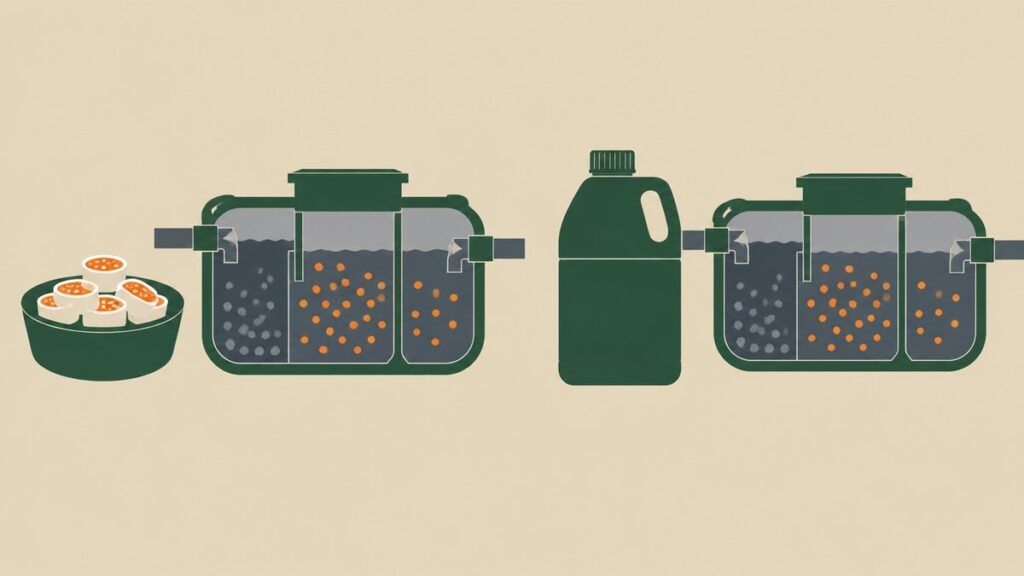
Chemical treatments and deodorizers
Chemical treatments use formulas to mask odors, neutralize smells or break down waste. They vary a lot.
- Deodorizing formulas add fragrance and agents that cover or neutralize odors.
- Tank cleaners and descalers are used occasionally to loosen residue and buildup.
- Older or industrial formulas sometimes rely on strong chemicals that some campgrounds and septic systems don’t accept.
Advantages
- Quick, noticeable odor control.
- Can help loosen heavy buildup when used as a periodic cleaner.
Drawbacks
- May harm seals, valves or the tank if used incorrectly.
- Can interfere with biological treatments.
- Some chemicals are restricted at certain dump stations and campgrounds. Check the rules and the label.
- Some products simply mask odors without addressing the cause.
Best RV black tank treatment: how to choose
There isn’t one product that’s right for everyone, but a few questions narrow the field.
- What’s the main problem? Odors, sensors that read wrong, paper that won’t break down or a sluggish dump each point to a different approach.
- How do you camp? Weekend trips, full-timing, boondocking and cold-weather camping change what works.
- What does your toilet manufacturer allow? Check your toilet and tank manuals. Thetford’s guidance, for example, warns that household bleach and acids can dry out and damage toilet seals.
- What are the campground rules? Some parks restrict certain chemicals and septic systems can be sensitive to them.
- Is it formulated for RV holding tanks? Look for a label stating it’s designed for RV or marine holding tanks.
- How easy is it to use consistently? Pods, liquids and powders each have their fans. The best treatment is the one you’ll use every time.
Be skeptical of exaggerated claims. If a product promises to eliminate all odors, break down anything and replace flushing, it’s overselling.
How to use a black tank treatment
- Start after dumping and flushing. Add treatment to a clean, empty tank, so it has something to work on and isn’t diluted away.
- Add water first, typically a few gallons through the toilet, so the product can spread.
- Use the dose on the label, based on your tank size. More is not better, and overdosing can cause foaming or other problems.
- Re-dose as directed, often after each dump, or at the interval the product states.
- Use plenty of water when flushing, and RV-safe toilet paper. See our guide to the RV toilet.
- Keep the valve closed until the tank is partly full. Thetford notes that leaving the black tank dump valve open lets liquids drain and leaves a pyramid of solids behind.
- Flush after each dump until the water runs clear.
What not to put in the black tank
- Bleach and strong household cleaners, which can damage seals and harm biological treatments.
- Automotive antifreeze, which is toxic and the wrong product. Only use RV antifreeze if your manual calls for it.
- Petroleum-based products and solvents.
- Home “hacks” with unproven ingredients, unless the toilet or tank manufacturer approves them.
- Anything not made for RV holding tanks.
Treatments in cold weather and storage
Cold slows biological treatments, so they may work less well in winter. For storage, empty and flush the tank, add the product the way the manufacturer recommends and, if freezing is possible, follow your manual for protecting the tank and valves. See our guide on how to winterize an RV.
Common problems and what to try
- Persistent odor. Check the toilet seal, the roof vent and the tank for buildup before changing products. Our guide to RV toilet valve repair covers the seals.
- Sensors read full. Residue coats the probes; flush thoroughly. Our guide to RV tank sensors explains this in detail.
- Paper clumps. Use less paper, switch to RV-safe paper and use more water.
- Foaming. Too much product or soap. Reduce the dose and flush.
Safety and sanitation notes
Wear gloves when handling treatments and wastewater, and wash your hands. Keep products away from children and pets, store them in their original containers and don’t mix them. Dump only at approved dump stations or sewer connections.
Frequently asked questions
Do I need a black tank treatment at all?
Not always. Good habits, with lots of water and regular flushing, solve many problems. A treatment helps when you have persistent odors, buildup or paper clumping.
Are enzymes better than chemicals?
For addressing the cause of odors and buildup, many owners prefer enzymes. Chemicals can give fast odor control. Each has limits, so use what the problem and your toilet manufacturer call for.
How much treatment should I use?
Follow the label’s dosing for your tank size. Using more doesn’t improve results.
Can I use dish soap or laundry detergent instead?
Some owners do, but results vary and it isn’t a replacement for a proper flush. Check what your toilet and tank manufacturer allow.
Sources
When this guide and your manual disagree, follow the manual. These are the references used.