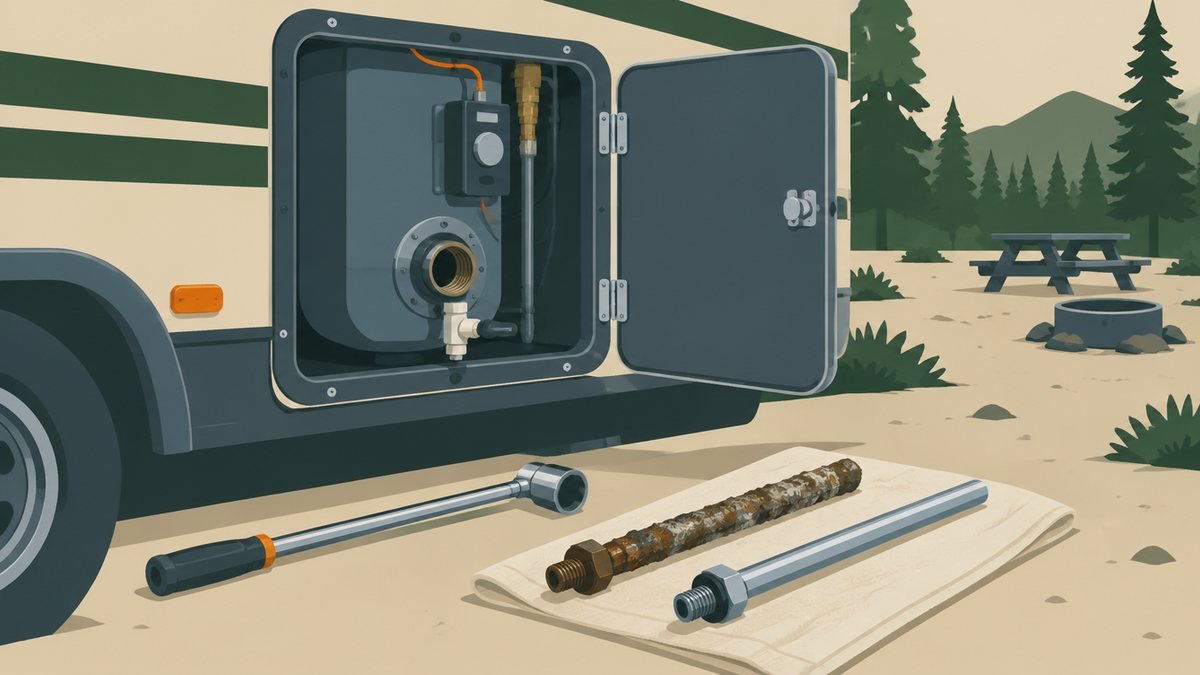
If your RV has a steel tank water heater, the RV water heater anode rod is the small part that quietly keeps the tank from rusting out. Right next to it in importance is the bypass valve, which lets you isolate the heater for winterizing and service. Neither part gets much attention until something goes wrong: a rotten-egg smell, rusty water, a leaking tank, or a heater that fills with antifreeze every fall.
This guide explains what the anode and bypass do, how to inspect and replace an anode, and how to use and troubleshoot your RV water heater bypass valve.
What an RV water heater anode rod does
An anode rod is a metal rod, usually magnesium or aluminum, that threads into the tank. It’s a sacrificial part: through a natural electrochemical process, minerals and corrosion attack the anode instead of the steel tank. Over time, the anode gets eaten away while the tank stays protected.
When the anode is mostly gone, the protection stops, and corrosion starts on the tank itself. A tank that rusts through can’t be repaired; the whole water heater has to be replaced. That’s why checking the anode is one of the most cost-effective maintenance jobs on an RV.
Does your water heater need an anode?
Not every RV hot water tank uses one:
- Steel, porcelain-lined tanks typically rely on an anode rod, which often doubles as the drain plug.
- Aluminum tanks generally have a protective layer on the inside and are not designed for an anode. They use a plain plastic or brass drain plug. Don’t install an anode in a tank that wasn’t designed for one.
- Tankless water heaters don’t use an anode.
If you’re not sure, check your owner’s manual or the label inside the water heater access door.
How to inspect an anode rod for an RV water heater
Many owners check the anode at least once a season, and more often if they camp full-time or in areas with hard water. Here’s the process:
- Turn off the heater. Switch off both the propane and electric controls and let the water cool completely. Hot water can scald.
- Turn off the water supply by shutting off the water pump and disconnecting city water.
- Relieve pressure by opening a hot faucet inside, then carefully lifting the pressure relief valve lever on the outside panel.
- Remove the anode with the correct socket. It can be tight; use steady force and avoid twisting the tank fitting.
- Inspect it. A new anode is a smooth, uniform rod. As it wears, it becomes pitted, thinner and may show exposed core wire. If much of the rod has been eaten away, replace it.
- Flush the tank while the anode is out. A tank rinser wand attached to a garden hose helps wash out sediment.
- Install the new anode with thread seal tape where the manufacturer recommends it, and tighten firmly without over-tightening.
- Refill the tank with a hot faucet open until water flows steadily with no air, then turn the heater back on.
Why the anode may wear out fast
How quickly an anode wears depends on your water. Hard water, frequent use, and water softeners can all speed it up. That’s one reason owners who install an RV water softener sometimes find they need to check the anode more often.
Rotten-egg smell from hot water
A sulfur or rotten-egg smell in hot water is a common complaint. It’s often caused by bacteria in the water reacting with a magnesium anode. Flushing and sanitizing the tank usually helps, and some owners switch to an aluminum or aluminum-zinc anode, which can reduce the reaction. Use only an anode type approved for your heater.
What the RV water heater bypass valve does
The bypass valve lets you route water around the water heater instead of through it. You’ll mostly use it for two things:
- Winterizing, so antifreeze goes to the faucets without filling the tank. Our overview of RV water heater types explains how this differs between tank and tankless units.
- Service, so you can drain or work on the heater while the rest of the plumbing stays usable.
Common bypass configurations
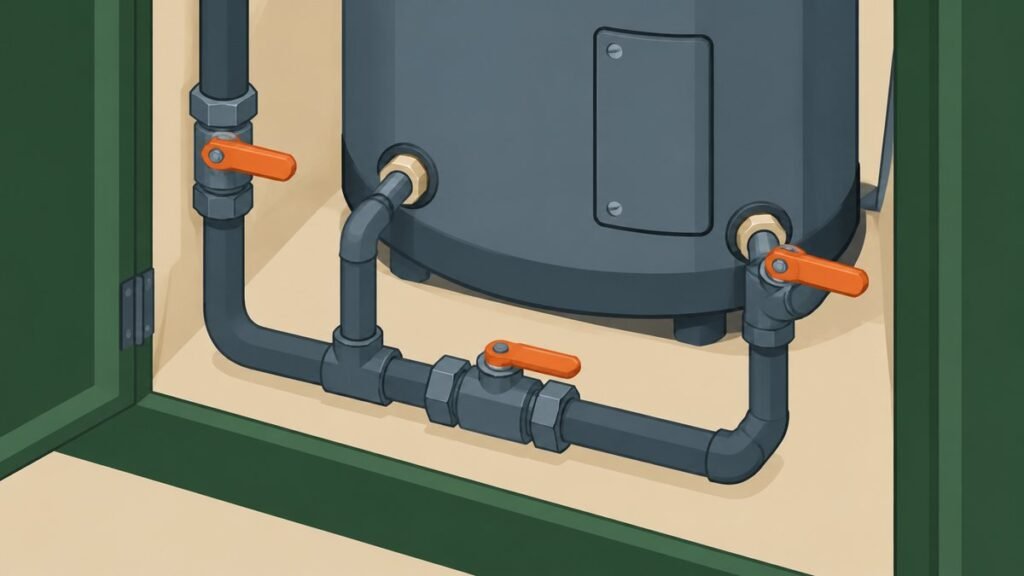
- Three-valve setup: one valve on the cold inlet, one on the hot outlet, and one on a crossover line between them. In normal mode, the inlet and outlet are open and the crossover is closed. In bypass mode, it’s the reverse.
- Two-valve setup with a check valve: uses a one-way check valve in place of one of the manual valves.
- Single combination valve: one handle switches between normal and bypass.
The valves are usually behind the water heater, reached through a cabinet, under a bed or behind a panel inside the RV. Some RVs have a labeled bypass panel in a utility compartment.
Troubleshooting the bypass
- Antifreeze ended up in the tank. One of the valves didn’t seal, or a check valve is stuck. Inspect the valves and replace any that don’t close fully.
- No hot water after winter. The heater may still be in bypass mode. Return the valves to normal, fill the tank and purge air before turning it on.
- Hot water mixing into cold lines. A leaking crossover valve or check valve can let hot water cross over. Replacing the valve usually fixes it.
- Leaks at the valves. Plastic fittings can crack, especially after a freeze. Shut off water and replace damaged parts.
If your RV didn’t come with a bypass, a kit can be installed. Our guide to the RV winterizing kit covers installation.
Other parts worth checking at the same time
While the heater is drained, it’s a good time to look at:
- The pressure and temperature relief valve. A little dripping when the tank is hot can be normal on some units as pressure builds, but constant leaking or a stuck valve needs attention.
- The electric element, if your heater has one. A failed RV water heater element is a common reason a heater works on propane but not on electric. Testing and replacing it involves 120-volt wiring, so disconnect shore power first or have a technician do it.
- The burner area, for insect nests or debris.
Safety notes
Always turn off propane and electric power to the water heater and let it cool before removing the anode or opening the relief valve. Never turn the heater on with an empty tank. If you smell propane, leave the RV and call 911 or your propane supplier from a safe distance. Leave burner, gas valve and wiring repairs to a qualified RV technician.
Frequently asked questions
How often should I replace my RV water heater anode rod?
There’s no fixed schedule because wear depends on water quality and use. Inspect it regularly, at least once a season, and replace it when a significant portion has been eaten away.
Can I run my water heater without an anode?
If your tank was designed for an anode, running without one leaves the tank unprotected and can shorten its life. Use a plain plug only if your heater is designed for it.
Why is my anode rod stuck?
Mineral buildup and corrosion can lock the threads. Use the correct socket with a long handle and steady pressure. If it won’t budge, stop before you damage the tank fitting and get help from a technician.
Where is my water heater bypass valve?
Usually directly behind the water heater inside the RV, often reached through a cabinet, closet or under a bed. Your owner’s manual should show the exact location.
Sources
Your own manual has the last word on your exact model. The sources below are good places to confirm the general details.