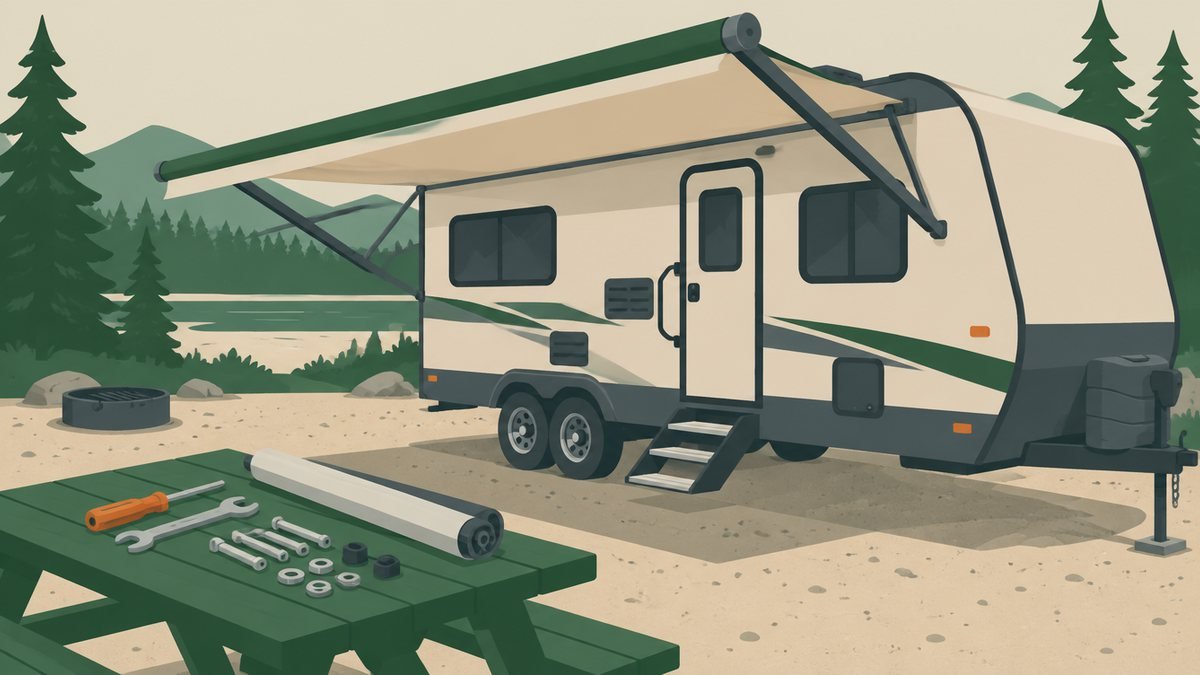
An RV awning gives you shade, a dry place to sit and a bit of extra living space, until it won’t roll up, sags in the middle, flaps in the wind or tears. RV awning repair covers everything from tightening a loose bolt to replacing a bent arm, and most of the common problems have a simple cause you can check yourself. The key is to know which jobs are safe for an owner and which involve springs and parts under tension that deserve a professional.
This guide explains how RV awnings work, the common problems and fixes, and when to stop and call for help.
How an RV awning works
Most RV patio awnings share the same basic parts:
- The fabric. Vinyl or acrylic material that unrolls to create shade.
- The roller tube. A tube that the fabric wraps around. Inside it, a spring tensions the roller so the fabric stays taut and rolls up.
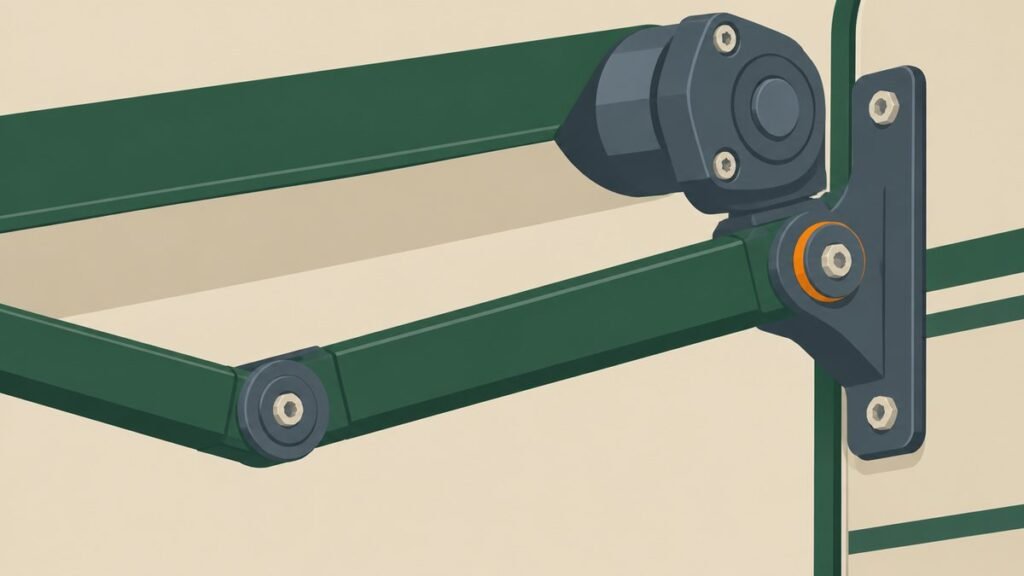
- The arms. Folding arms, often with a pitch adjustment, that extend the awning and support it.
- The mounting brackets and rail. They attach the awning to the RV wall or roof edge.
- The lock and release mechanism, such as a lock lever that holds the arms or locks the roller.
- The motor and controls, on electric awnings. Manual awnings use a pull strap or hand crank.
Types include manual awnings, operated by a strap or crank, electric awnings, operated by a switch or remote, and slide-out awnings, a smaller type that protects a slide-out room from debris and water. Some owners also add a patio awning to the side of the RV that includes LED lighting.
Common RV awning repair problems
Awning won’t roll up or out
For a manual awning, check whether the lock lever, travel latches or a catch is engaged, or something is snagged. Look for a jam, bent arms or a torn fabric caught in the roller. For an electric awning, check the power: the 12-volt supply, fuse, switch and remote battery. A weak house battery can cause an electric awning to move slowly or stop.
Awning sags or pools water
A sagging awning can collect water and rainwater is heavy. Adjust the awning’s pitch so one side is lower and water drains off. If the fabric has stretched or the roller has lost tension, the awning may no longer stay taut. Never leave a sagging awning out in rain, as the weight can bend arms or tear the fabric.
Fabric is torn or frayed
Small tears can sometimes be patched with repair tape made for awning fabric, but a large tear or a worn awning usually needs a new piece of material. See our guide to RV awning fabric replacement.
Awning flaps or rattles in the wind
Loose arms, worn hardware or low roller tension can make an awning flap. Tighten fasteners and check the arms. In wind, the safest approach is to roll the awning in; don’t leave it out when you’re away or sleeping.
Arms bent or damaged
Wind gusts and snow can bend awning arms. Bent arms often can’t be straightened reliably. They should be replaced as a set, since awning arms are made to work together and a mismatched one can cause binding.
Awning leaks at the mounting
Water coming in where the awning attaches to the RV is usually due to old or missing sealant around the brackets and rail. Remove old sealant, clean the area and reseal. See our guide to RV roof sealant for compatible types.
Electric awning motor problems
If the motor hums but doesn’t move, or doesn’t run at all, check the wiring, the fuse, the switch and the supply voltage. Motor and gear failures typically need a technician.
Basic troubleshooting steps
- Inspect visually. Look at the fabric, arms, roller ends, brackets and hardware for damage or loose parts.
- Check for obstructions. Look for fabric caught in the roller, a bird’s nest, debris or a latch still engaged.
- Operate it gently. Extend and retract slowly. Listen for grinding or rubbing, and watch for uneven movement.
- Check the pitch and lock settings on the arms.
- Tighten fasteners on brackets and arms. Don’t over-tighten.
- For electric models, check the battery, fuse and remote.
Repairs you can usually do yourself
- Cleaning the fabric and the track.
- Tightening loose bolts and screws.
- Patching a small tear with fabric repair tape.
- Replacing an awning strap or lights.
- Resealing the mounting brackets and rail.
- Adjusting the arms and pitch.
- Replacing an awning’s fabric, if you’re comfortable following the manufacturer’s directions and can have help. The same project goes more smoothly with two people.
Repairs best left to a professional
- Anything that involves the roller tube’s spring. The spring is under tension and can cause serious injury if released improperly. Awning manufacturers provide specific instructions and sometimes tools for spring tension, and many owners prefer to have a technician do it.
- Electric motor and wiring faults.
- Bent or broken arms that need replacing.
- Damage to the RV’s wall or structure at the mounting points.
Preventing awning damage
- Retract the awning when you leave, at night and when wind is forecast. Many damaged awnings were left out in unexpected gusts.
- Use hold-downs or an anchor kit if you leave it out for short periods in light conditions, and still keep an eye on the weather.
- Tilt it for rain so water runs off, or retract it.
- Never leave the awning rolled up wet for long periods; let the fabric dry to avoid mildew.
- Clean it regularly with mild soap and a soft brush, and avoid harsh chemicals.
- Inspect hardware at the start of each season.
- Keep branches and sharp objects away from the fabric.
Slide-out awnings (toppers)
A slide-out awning is mounted above a slide-out room to keep water and debris off the slide’s roof and seals. If the fabric tears or sags, water and leaves can collect and damage the seals and the roof below. Replace a damaged topper promptly, and check the seals when you do. See our guides to RV slide-out seal replacement and how to fix an RV slide out.
Safety notes
Awning arms and rollers can swing, pinch and snap, and the spring in a roller tube can release with force. Never stand under an awning that’s being adjusted, and keep people and pets clear. Don’t try to force a jammed awning. Work from a stable ladder, and have a helper hold the awning if needed. Stay away from power lines. Don’t operate an awning in strong wind, and don’t leave one extended when you’re asleep or away. If you aren’t sure how to release tension safely, hire a qualified RV technician.
Frequently asked questions
Can I repair a torn RV awning?
Small tears can often be patched with awning repair tape. Large tears or worn fabric usually mean replacement.
Why won’t my RV awning roll up?
Common causes are a locked latch, an obstruction, a bent arm, a jammed roller or, on electric models, a power problem.
How do I stop my awning from flapping?
Check that the arms are tight and the roller tension is correct. In wind, retract the awning.
How long does an RV awning last?
It depends on sun, weather and care. Fabric wears out sooner in harsh sun, and regular cleaning and prompt retraction help.
Sources
Model details differ, so follow the instructions that came with your equipment. These are the sources behind this guide.