When a slide-out room won’t move, moves crooked, makes grinding noises or stops halfway, it’s easy to panic. Many owners have to deal with a slide-out problem at some point, and most problems fall into a few categories: not enough power, an electrical fault, something blocking the room or a worn mechanical part. Knowing how your slide-out works helps you tell a simple fix from a job for a technician.
This guide explains how the common types of slide-out mechanisms work, what to check first when one stops working, how to retract a stuck slide safely, and how to keep it in good shape.
How an RV slide-out works
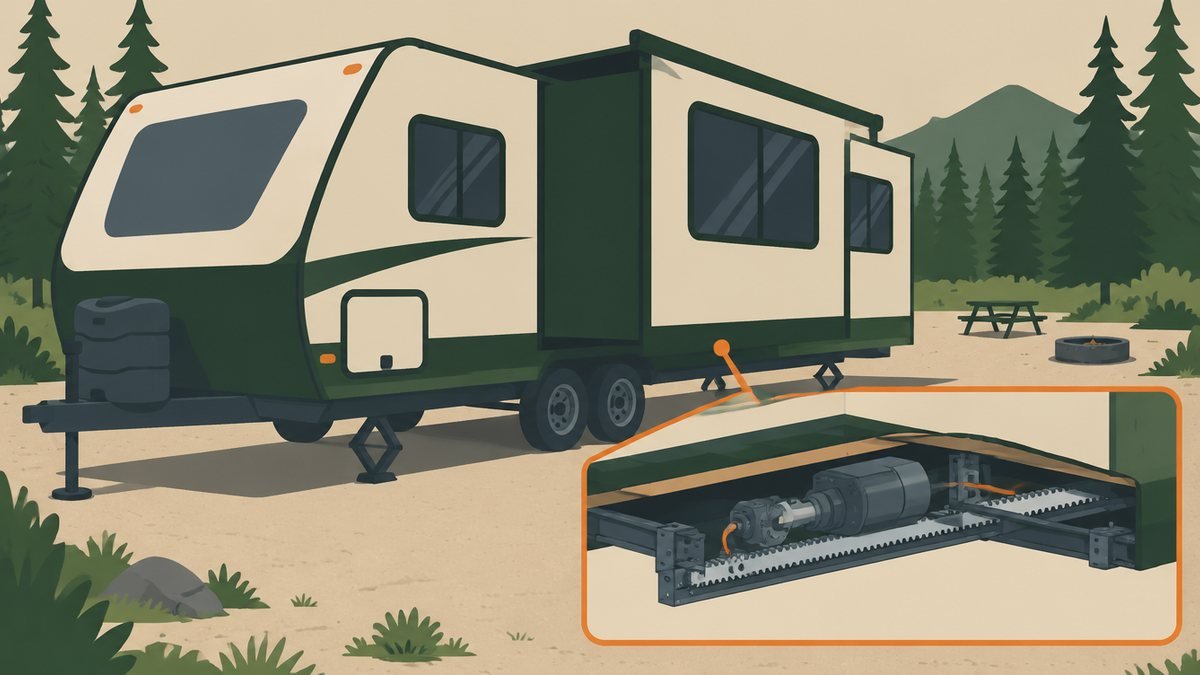
A slide-out is a room section built on rails or tubes that extends outward from the body of the RV, adding floor space when you’re parked. A motor and a mechanism move it in and out, and seals around the opening keep out weather. There are several common types:
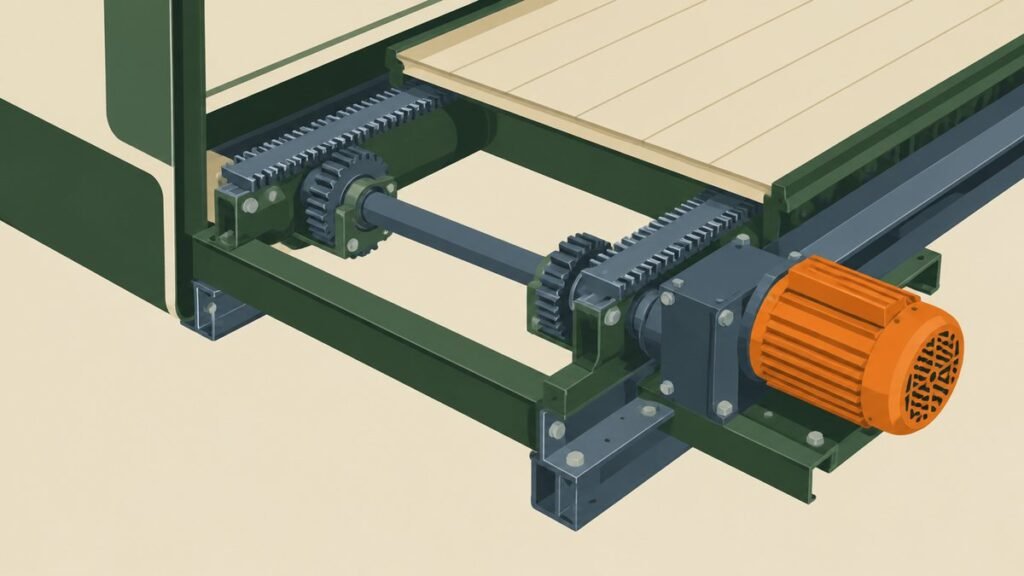
- Electric rack-and-pinion (gear-driven). Electric motors turn gears that move along toothed racks attached to the slide. Common on many towables and motorhomes.
- Hydraulic. A hydraulic pump pushes cylinders that move the room. Common on larger motorhomes.
- Cable-driven. A motor winds cables to pull the room in and out.
- Schwintek or inner-wall systems. Motors and gear tracks built into the sides of the slide, which move it along a track. These systems rely on correct synchronization between the two sides.
Which type you have affects what to check and what you can safely fix. Your manual and the slide manufacturer’s documentation will show the specifics.
How to fix a stuck RV slide-out: first checks
Most no-movement problems come down to power. Start with the simple things.
- Check the battery. Slide-outs need strong 12-volt power. A weak or discharged battery, or low voltage at the motor, is the most common cause of a slow or stuck slide. Connect to shore power or run the generator, and check that the batteries are charged. See our guide to the RV battery charger for charging basics.
- Check fuses and breakers. Look for a blown fuse or tripped breaker in the slide circuit, often near the control panel or battery area.
- Check the switch or control panel. A worn switch may not send power. Try the controls in the correct sequence, and check the manual for any lockout, such as a parking brake or transmission interlock on a motorhome.
- Look for obstructions. Make sure nothing is blocking the room, such as furniture, a rug, a chair, a stabilizer jack, or debris in the track.
- Check the level. If the RV is badly out of level or the jacks aren’t set, the slide can bind. Leveling the RV can free it.
- Listen. A clicking sound may point to a relay, a humming motor suggests a mechanical bind or low power, and grinding may mean damaged gears.
Common slide-out problems and what they mean
Slide moves slowly or stops partway
Often caused by low voltage, corroded or loose connections, or a motor that’s struggling. Check the battery, clean and tighten battery terminals and the connections on the slide circuit. Make sure the slide isn’t dragging on something.
Slide moves crooked or jams on one side
On two-motor systems, the sides can get out of sync. Some systems have a procedure to resynchronize or reset them; check your manual. If a gear, rack or roller is damaged, the slide may bind and need repair.
Motor runs but the slide doesn’t move
A stripped gear, a broken coupling or a damaged cable can leave the motor spinning without moving the room. This usually needs a technician.
Slide is noisy or jerky
Dirt, dry gears, worn rollers or a loose component can cause noise. Clean and lubricate the mechanism as the manufacturer recommends.
Slide leaks or lets in drafts
Worn or flattened slide-out seals are the usual cause. See our guide to RV slide-out seal replacement. A cracked or sagging slide topper, an awning over the slide, can also let water in, as covered in our RV awning repair guide.
How to retract a stuck slide-out manually
If you must get on the road and the slide won’t retract with the switch, most RVs include a manual override. The method depends on the system: it might involve a hand crank at the motor, a drill with a socket bit or a hydraulic bypass valve. Check your manual first, because using the wrong method can damage the mechanism or hurt you.
General cautions when using an override:
- Make sure the RV is stable and parked safely, with the wheels chocked.
- Disconnect power to the slide system before manual operation, if the manual says to, so the motor doesn’t run unexpectedly.
- Have a helper watch the slide so it doesn’t catch on anything.
- Move the slide slowly and evenly, and keep both sides moving together on two-motor systems.
- Stop if the slide binds. Forcing it can bend rails or break gears.
If your slide won’t close and you can’t resolve it safely, don’t drive with it extended. Contact a mobile RV technician.
Routine slide-out maintenance
- Keep the tracks, rails and gears clean. Remove dirt, leaves and debris, and wipe off old, gritty lubricant.
- Lubricate as the manufacturer directs. Use the type of lubricant recommended for your slide system. The wrong product can attract dust or damage plastic parts, and some systems say not to lubricate at all.
- Inspect the seals. Look for cracks, tears, flattened seals and gaps. Clean and treat rubber seals with a product made for them.
- Check fasteners and brackets. Look for loose bolts and parts.
- Keep the roof clear. Leaves and debris on the slide’s roof can cause water pooling and damage. A slide topper helps, and so does regular cleaning.
- Operate the slide regularly. Even in storage, cycling the slide occasionally keeps seals pliable and mechanisms moving.
Preventing slide-out problems
- Level the RV before operating the slides.
- Don’t overload an extended slide with heavy items.
- Don’t extend or retract the slide in high winds or when the RV is not stable.
- Keep batteries healthy and well-charged.
- Inspect and reseal the roof and slide edges; see our RV roof sealant guide for more.
Safety notes
Slide-outs are heavy and powerful, and can crush hands, tools, pets and people. Keep people, children and pets clear whenever the slide moves. Never place your hands or body between the slide and the RV while it’s moving, and never rely on the motor to hold a slide in place while you work underneath. Turn off power before reaching into the mechanism. Hydraulic systems hold high pressure, so don’t open lines unless you know how to relieve it. If you’re unsure, call a qualified RV technician.
Frequently asked questions
Why is my slide-out going in and out slowly?
Low battery voltage, poor connections or a mechanical drag are common causes. Charge the batteries first, then check the connections and tracks.
Can I drive with the slide-out extended?
No. Always fully retract and secure slides before moving the RV.
How often should I lubricate my slide-out?
Follow the manufacturer’s instructions for your system. Some call for periodic lubrication and some for none, so check before applying anything.
Should I fix the slide-out myself?
Simple checks and cleaning are fine for most owners. Gear, motor and hydraulic repairs, or any problem that might involve wiring, are often best left to a professional.
Sources
Your own manual has the last word on your exact model. The sources below are good places to confirm the general details.