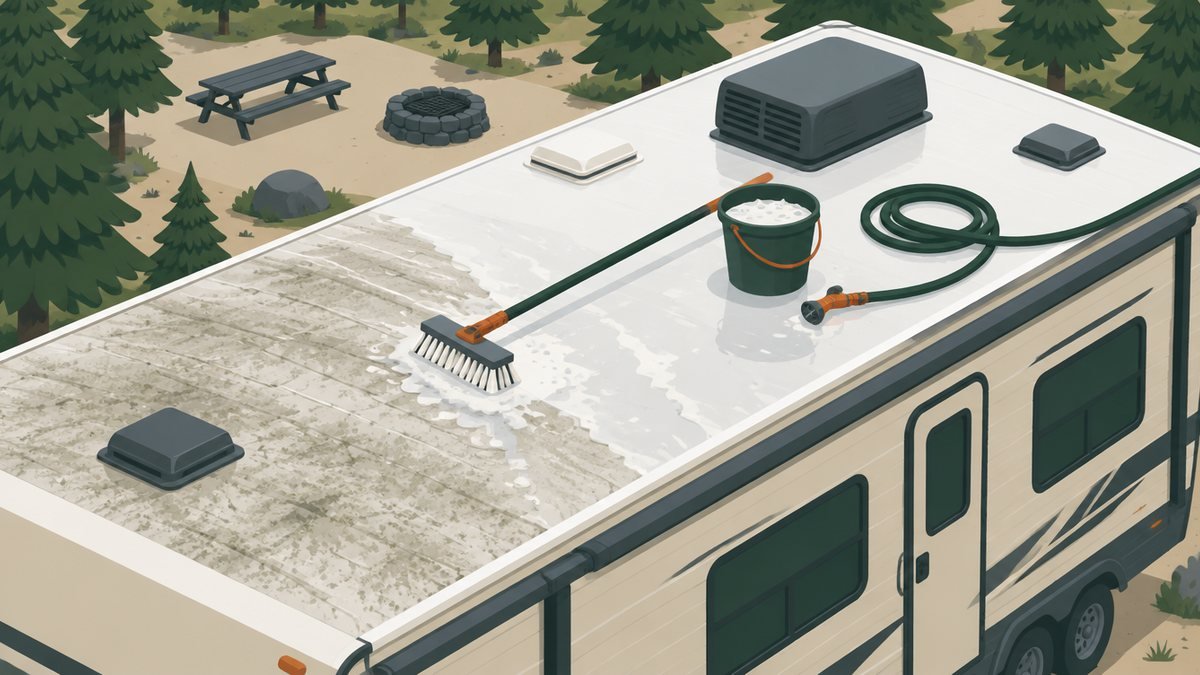
The best RV roof cleaner is the one that suits your roof material, and using the wrong product or tool is one of the quickest ways to damage an otherwise sound roof. Dirt, algae, tree sap, bird droppings and black streaks from vents and gutters build up over a season. Left alone, they hold moisture, break down the surface and hide small cracks you’d want to spot early. Cleaning the roof a couple of times a year also gives you an excuse to inspect it.
This guide explains how to clean an RV roof safely, which products and tools to use for each roof type, and what to avoid.
Why clean your RV roof
- It protects the roof surface. Dirt and grime hold moisture against the membrane and promote mold and mildew.
- It helps with inspection. You can see cracks, loose sealant and damage that dirt hides.
- It improves the sealant’s chances. Sealants stick to clean surfaces. See our guide to RV roof sealant for resealing.
- It reduces heat. A clean, light roof reflects more sunlight than a dirty one.
- It keeps streaks off the sides. Black streaks on the walls often start as dirt on the roof.
Know your roof type first
The right cleaner and method depend on what your roof is made of. Check your owner’s manual or ask the manufacturer.
- EPDM rubber. Common on towables and motorhomes. It can chalk over time, and the chalky residue creates the black streaks on the sides. Avoid petroleum-based products and harsh solvents, and use cleaners made for EPDM.
- TPO and PVC. Smooth, UV-resistant thermoplastic membranes. They typically need gentler, non-abrasive cleaners made for the material.
- Fiberglass. A rigid roof with a gelcoat surface that can be washed with a cleaner made for fiberglass. Avoid abrasive pads that scratch the gelcoat.
- Aluminum. A metal roof that needs a cleaner suitable for aluminum, since some chemicals can stain or corrode it.
Choosing an RV roof cleaner and tools
- A cleaner formulated for your roof material.
- A soft-bristle brush with a long handle. Avoid stiff brushes.
- A bucket, a garden hose and soft cloths or sponges.
- A ladder and, if the roof is designed to be walked on, soft-soled shoes.
- Gloves and eye protection.
- Fall protection if possible, and a helper.

Roof safety first
Not every RV roof can support a person’s weight, and even those that can are slippery when wet. Check the manual. Clean only when the roof is cool, dry to start with and the weather is calm. Wet roofs, soap and algae are slippery, so work slowly, use a long-handled brush from a ladder when possible and never work alone. Don’t go on the roof near power lines. If you aren’t comfortable, hire a pro.
How to clean an RV roof, step by step
1. Choose the day and the spot
Pick a cool, overcast day, or early morning, so the cleaner doesn’t dry on the roof. Park in a place where runoff is allowed and, ideally, on a surface that can take it. Avoid direct sun, which makes cleaners dry quickly and can leave streaks.
2. Sweep off loose debris
Remove leaves, branches and dirt with a soft broom. Check gutters and drains.
3. Wet the roof
Rinse the roof with a gentle stream of water. Don’t use a pressure washer, since high pressure can damage seals and force water under flanges and seams.
4. Apply the cleaner
Follow the label on your cleaner. Work in sections, so it doesn’t dry. Don’t mix products, and avoid using bleach on membrane roofs unless the manufacturer says it’s safe.
5. Scrub gently
Use a soft brush in light, overlapping strokes. Take extra time around vents, the air conditioner base and edges, where dirt collects. Don’t scrub hard enough to scratch or cut the surface.
6. Rinse thoroughly
Rinse away all cleaner with plenty of water. Leftover cleaner can leave a film or damage the surface. Rinse the sides of the RV too, to avoid streaks from runoff.
7. Let it dry and inspect
Let the roof dry completely, then inspect the seams, sealant, screws, vents and edges. This is the right time to reseal anything that’s cracked or lifted. If the damage is more than minor, see our guide to RV roof repair and replacement.
Dealing with stubborn problems
- Black streaks on the sides. Often from roof runoff. Clean the roof first, then the sides with a gentle product made for the surface.
- Mold and algae. Use a cleaner made for it and rinse completely.
- Tree sap. Treat with a product that’s safe for your roof material. Avoid scraping.
- Bird droppings. Clean quickly, since they can stain and damage the surface.
- Chalking on EPDM. Some chalking is normal as the roof ages. Cleaning removes the loose residue; some owners apply a protectant made for the roof type.
A simple seasonal routine
A little regular care beats an annual scrub:
- Spring: clean the roof, inspect every seam and penetration, and reseal what needs it.
- Summer: rinse off pollen, dust and bird droppings as they appear, and keep an eye on streaks along the sides.
- Fall: clear leaves and needles from the roof, vents and gutters before they stain or hold moisture, then clean the roof before storage.
- After storms: look for hail marks, debris, lifted edges and new cracks.
Take a few photos each time. Comparing them from season to season makes slow changes, such as new chalking, bubbles or shrinking sealant, easy to spot.
Protectants and coatings
After cleaning, some owners apply a UV protectant made for their roof type. These products can help slow aging and reduce chalking on some roofs, but they aren’t right for every material, and some make the roof slippery. Check compatibility, and follow the directions. Don’t apply anything over dirt, and don’t use household products.
What not to use
- Pressure washers at close range.
- Petroleum-based cleaners and solvents, on EPDM roofs especially.
- Abrasive pads and stiff brushes.
- Bleach and harsh chemicals unless the manufacturer approves them.
- Household cleaners that leave residue or aren’t made for RV roofs.
How often to clean
Most owners clean their roof two or more times a year, such as at the start of the camping season and before storage, and more often in areas with lots of trees, pollen, dust or bird activity. Rinsing off debris regularly helps. Pay attention to the roof vents too; our guide to the RV roof vent explains what to check there.
Safety notes
Falls from RV roofs cause serious injuries. Use a stable ladder on level ground, wear non-slip shoes, use fall protection and never work in wet, icy, windy or hot conditions. Wear gloves and eye protection when using cleaning products, and never mix cleaners. Keep chemicals away from plants, pets and waterways, and follow local rules about runoff.
Frequently asked questions
Can I use a pressure washer on my RV roof?
It’s not recommended. High pressure can damage seals and lift edges. Use a garden hose and a soft brush.
Can I walk on my RV roof?
Only if the manufacturer says your roof is designed for it. Even then, be careful about where you step, since the decking beneath may not support weight everywhere.
Is bleach safe for RV roofs?
Not on every material. Some manufacturers advise against it. Check with the roof maker before using bleach.
How do I know which cleaner to buy?
Choose one labeled for your roof material, such as EPDM, TPO or fiberglass, and follow the instructions.
Sources
These public agencies publish guidance that is a good place to confirm the details on this topic.